
How Long Does a Roof Last in Houston? Lifespans by Material
Typical Houston roof lifespans by material, from 3-tab shingles to standing seam metal, plus what wears roofs out early on the Gulf Coast and how to extend it.
How long does a roof last in Houston?
Most asphalt shingle roofs in Houston typically last about 15 to 30 years, often on the shorter end because of heat, UV, humidity, and storms. Metal roofs can last 30 to 40 years or more depending on the system, tile and slate can last decades longer, and flat commercial membranes usually last 15 to 25 years.
The number printed on a shingle bundle is not the number you get in Houston. Manufacturers rate products for average conditions, and the Gulf Coast is not average. Our summers are long and hot, the sun is intense, the air stays wet, and spring and hurricane season both throw storms at the same roof.
That does not mean your roof is doomed. It means the realistic answer depends on what is on your house, how it was installed, how the attic breathes, and what weather it has been through. Here is how we explain it to homeowners in Pearland and across Greater Houston.
In this article
Typical roof lifespans by material in the Houston climate
These are typical ranges we see on the Gulf Coast, not guarantees. A well installed, well ventilated roof can land at the high end. A rushed install on a hot, unvented attic can fall short of the low end.
| Roofing material | Typical lifespan in Houston area | Notes |
|---|---|---|
| 3-tab asphalt shingles | 15 to 20 years | Thinner, lighter shingle; more prone to wind lift and granule loss |
| Architectural (dimensional) shingles | 20 to 30 years | Thicker, layered shingle and the most common choice on new homes |
| Class 4 impact-resistant shingles | 20 to 30 years | Highest UL 2218 impact rating; better odds against hail |
| Exposed fastener metal (screw-down panels) | 30 to 40 years | Panels last long, but screws and rubber washers usually need attention sooner |
| Standing seam metal | 40 years or more | Concealed fasteners, fewer leak points, strong wind performance |
| Concrete or clay tile | 50 years or more | Tiles can outlast the underlayment beneath them, which may need replacing first |
| Natural slate | Many decades | Very long life when installed correctly; heavy and needs proper framing |
| TPO (flat or low slope) | 15 to 25 years | Common on commercial roofs; seams and flashing are the weak points |
| Modified bitumen (flat or low slope) | 15 to 20 years | Durable for low slope roofs; surface can blister and crack in heat |
If you are weighing materials for a new roof, our shingle roofing, metal roofing, and slate and tile roofing pages go deeper. Business owners with flat roofs can start with commercial roofing. For a head to head comparison, read metal roof vs shingles in Houston.
What shortens roof life in Pearland and Houston
Most roofs here do not wear out evenly. Something specific usually speeds things up, and it is almost always one of these.
Heat and UV
Asphalt shingles contain oils that keep them flexible. Months of high heat and strong sun dry those oils out. Shingles get brittle, crack, and shed the granules that protect them from UV. South and west facing slopes almost always age first.
Humidity and algae
Our humidity feeds algae, the dark streaks you see on so many Houston roofs. Algae is mostly cosmetic at first, but moss and debris that hold moisture against shingles and decking can shorten roof life. Gutters that overflow make it worse, which is why seamless gutters are part of roof health.
Hail, wind, and tropical storms
Spring hail can bruise shingles and knock off granules even when you cannot see damage from the ground. High winds lift shingle tabs and break the seal strips. Hurricane season runs June 1 to November 30, and one strong storm can take years off a roof. If you have been through a storm recently, our storm damage restoration team can check what changed.
Poor attic ventilation
This one is underrated. A hot attic cooks shingles from below while the sun cooks them from above. Trapped moisture can also rot decking and rust nails. Balanced intake and exhaust ventilation is one of the cheapest ways to protect a roof's lifespan.
Bad installation
Wrong nail placement, missing starter strips, reused flashing, and skipped drip edge all lead to early failure. Many shingle warranties also depend on proper installation, so a bad install can cost you twice.
Signs your roof is near the end of its life
You do not need to climb a ladder to spot most warning signs. From the ground or the attic, look for:
- Curling, cupping, or cracked shingles
- Bald spots or heavy granules collecting in gutters and at downspouts
- Missing shingles after normal wind
- Sagging rooflines or soft spots (a sign of decking trouble)
- Daylight through roof boards or water stains in the attic
- Ceiling stains or recurring leaks in the same area
- Rusted or loose fasteners on a metal roof
- Cracked or slipped tiles, or exposed underlayment
- Blisters, splits, or ponding water on a flat roof
One sign alone does not always mean replacement. Several together, on a roof near the top of its typical range, usually does. Our guide on roof repair or replacement walks through how to make that call.
How regular inspections extend roof life
Small problems are cheap. A popped nail, a cracked pipe boot, or a loose piece of flashing can usually be fixed in an hour. Left alone through one rainy season, the same issue can soak decking and insulation and turn into a much larger job.
A good inspection looks at:
- Shingle or panel condition on every slope
- Flashing at chimneys, walls, skylights, and valleys
- Pipe boots and roof vents
- Fasteners and sealants on metal systems
- Attic ventilation, decking, and signs of moisture
- Gutters, fascia, and drainage
We suggest an inspection about once a year and after any major hail or wind event. If something needs attention, our roof repair crew can usually handle it before it spreads. You can schedule a free check through our roof inspections page.
What you can do between inspections
Most of what extends a roof's life happens from the ground. A few habits go a long way:
- Keep gutters and downspouts clear, especially after spring and fall storms
- Trim tree limbs that hang over or rub against the roof
- Look at the roof from the ground after big storms and note anything that changed
- Check the attic a couple of times a year for damp insulation, stains, or musty smells
- Make sure bathroom and kitchen fans vent outside, not into the attic
If you spot something, take a photo and call. Catching a problem in spring usually means a smaller fix than finding it after hurricane season.
Roof age vs roof condition
Age is a useful starting point, but condition decides it. A 12 year old roof in Pearland can be worn out from hail and a hot attic, while a 22 year old roof may still have life left because it was installed well and kept clean.
That is why a date on a permit or a home inspection report only tells part of the story. If you are buying a home, selling one, or trying to budget for the next few years, a close look at the actual roof gives you a much better number than the calendar does.
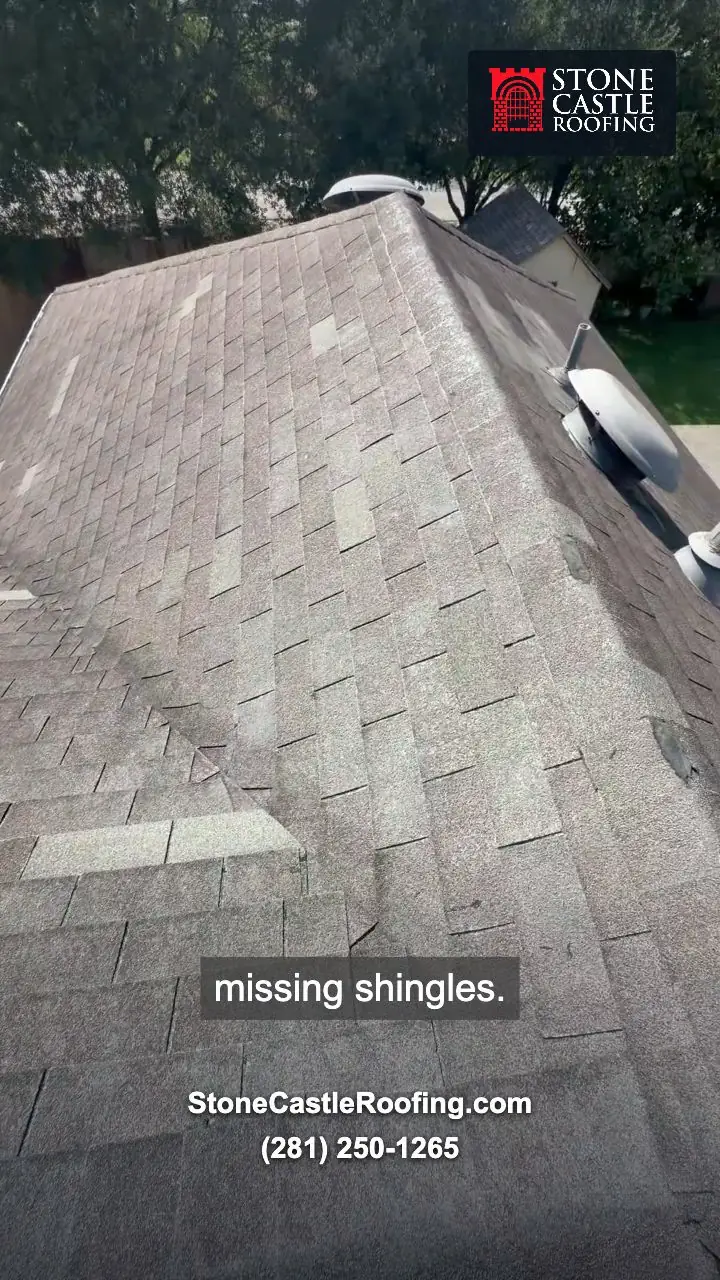
Roof Repair or Replacement? Missing Shingles and Granule Loss
Read the transcript
Do you have a roof where you are constantly seeing shingles fly off and you're constantly getting repaired and you're seeing cracked shingles? If your roof is already at that stage, it's better just to get it replaced. Because you're going to have more shingles flying off, kind of like what you see here. We've already replaced all the shingles that flew off in those areas over there, but they continue to come out. If you look at that right there, there's a lot of granule loss, more missing shingles. All those shingles there in the background were all replaced. Now you see more new cracked shingles over there. So it's better to stop wasting money on getting it repaired and just put a great roof system on there. You can put a regular 30 year, class three or class four. Look right there, there's even rotted wood in that area in front of the pipe jack because water is starting to infiltrate inside.
Making your next roof last longer
If your roof is due, a few choices will make the next one go further in this climate:
- Pick the right material for your goals. Class 4 shingles carry the highest UL 2218 impact rating, and standing seam metal holds up well against wind. Both tend to handle Gulf Coast storms better than basic shingles.
- Fix ventilation during the reroof. It is the easiest time to add or balance vents.
- Replace flashing and underlayment, not just shingles. Reusing worn components is a common shortcut.
- Hire a crew that installs to manufacturer specs. Stone Castle Roofing is a GAF Certified Plus contractor, and our team brings 20+ years of combined roofing industry experience to every roof replacement.
- Know your windstorm requirements. Homes in Brazoria and Galveston counties, and part of Harris County east of State Highway 146, are in the TWIA designated catastrophe area. Roof work there generally must meet the windstorm building code, and we coordinate the required inspection when a project needs one.
Talk to a Pearland roofer
Call us when you want a realistic answer on how much life your roof has left. We will back it up with photos of what we find. Stone Castle Roofing is locally owned and serves Pearland, Houston, and the surrounding area. Schedule a free inspection online, contact us, or call (281) 250-1265.
Frequently Asked Questions
Asphalt shingles in Houston typically last about 15 to 30 years. Basic 3-tab shingles often land around 15 to 20 years, while architectural shingles usually last 20 to 30 years. Heat, UV, humidity, hail, and attic ventilation all affect where a specific roof falls in that range, so an inspection gives a better estimate than age alone.
Yes, in most cases. Standing seam metal roofs can last 40 years or more, and exposed fastener metal roofs typically last 30 to 40 years with fastener upkeep. Both usually outlast asphalt shingles in the Gulf Coast climate. Upfront cost is higher, so the better value depends on how long you plan to own the home.
Roofs on the Gulf Coast face long stretches of high heat, strong UV, constant humidity, spring hail, and tropical storms. Heat dries out asphalt shingles, humidity feeds algae and moisture problems, and storms damage shingles and flashing. Poor attic ventilation adds heat from below, which can shorten a roof's life even more.
Most Pearland homeowners should have their roof inspected about once a year and after any significant hail or wind storm. Annual checks catch small issues like cracked pipe boots, loose flashing, or lifted shingles before they cause leaks. Stone Castle Roofing offers free roof inspections with photos of anything we find.
Yes. A roof that was installed correctly, has balanced attic ventilation, clean gutters, and regular inspections can reach the high end of its typical range. Fixing small problems quickly matters most. Skipped maintenance, poor installation, and storm damage that goes unrepaired are the main reasons roofs fail early.
Related articles
Roof Repair or Replacement? How to Decide on a Houston Home
Not every roof problem needs a new roof. Use this decision guide on age, damage, leaks, decking, and insurance to choose between repair and replacement.
7 min read
Metal Roof vs Shingles: An Honest Comparison for Houston Homes
Metal or shingles for your Pearland or Houston home? An honest look at lifespan, hail, wind, heat, noise, HOA rules, insurance and the long-term cost of each.
8 min read
Class 4 Impact-Resistant Shingles in Texas: Are They Worth It?
What does Class 4 really mean, and will it lower your Texas insurance bill? A Pearland roofer explains UL 2218, hail performance, cost, and who should buy.
8 min read
About Stone Castle Roofing
Stone Castle Roofing is a locally owned roofing contractor in Pearland, TX, serving homeowners and businesses across Greater Houston. We are a GAF Certified Plus contractor and every project starts with a free roof inspection.