
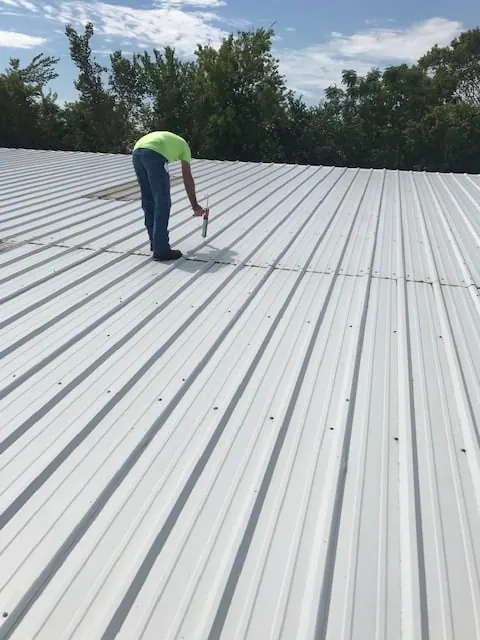
Commercial Roofing Houston
Commercial Roofing Contractor in Houston and Pearland
Flat and low-slope roof installation, repair, restoration and maintenance for businesses, property managers, churches and HOAs across Greater Houston.
- 5.0 stars from 100+ Google reviews
- GAF Certified Plus contractor
- BBB Accredited, A+ rating
- Locally owned in Pearland
As a commercial roofing contractor in Houston and Pearland, Stone Castle Roofing installs, repairs and restores TPO, modified bitumen, metal and coated roofs for building owners and property managers. We plan the work around your operations to keep disruption low, and we document the roof with photos and written findings you can use for insurance claims and capital budgeting.
We handle new installs, repairs, restorations and ongoing maintenance. For specific needs, go straight to commercial roof repair or commercial roof replacement.
What is the most common commercial roof system in Houston?
TPO is one of the most common commercial roof systems in Houston because its white, reflective membrane helps reduce cooling loads in the heat and its heat-welded seams resist leaks. Modified bitumen, metal and roof coatings are also widely used. The right system depends on the building, roof slope, budget and how long you plan to own it.
Watch
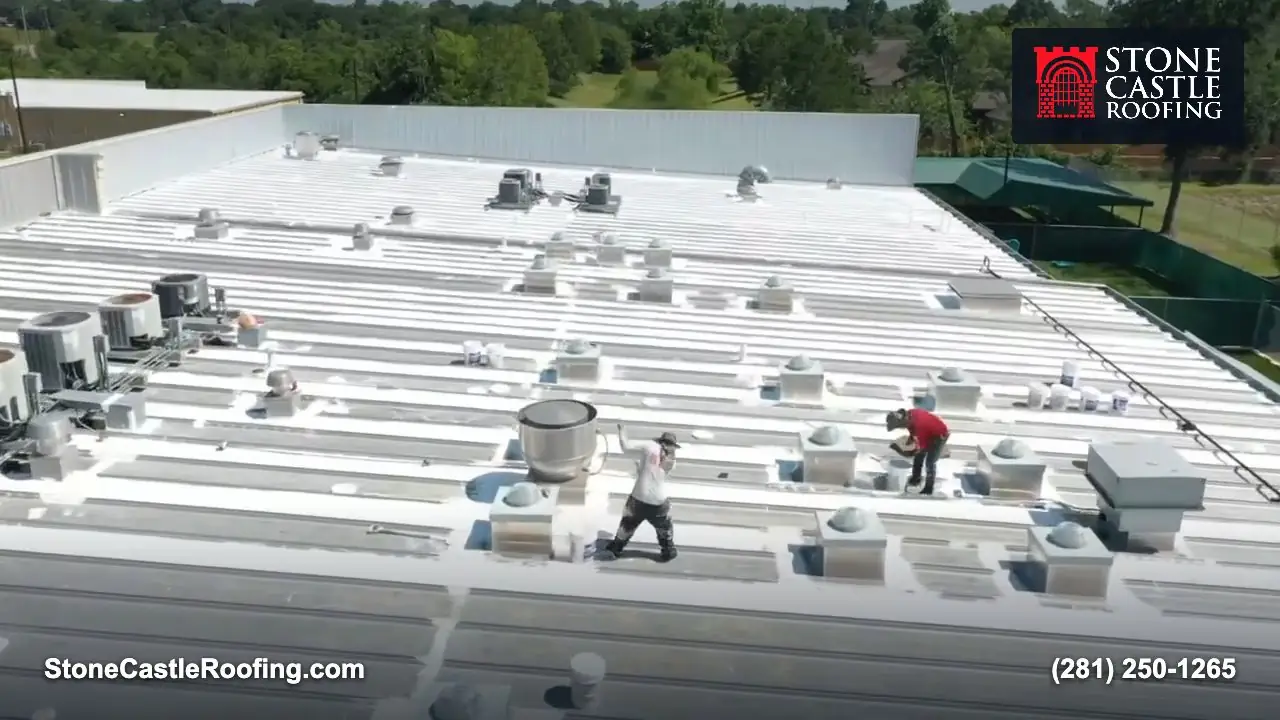
Commercial Metal Roof: Aerial Project Views
Watch on its own pageRead the transcript
[Instrumental music]
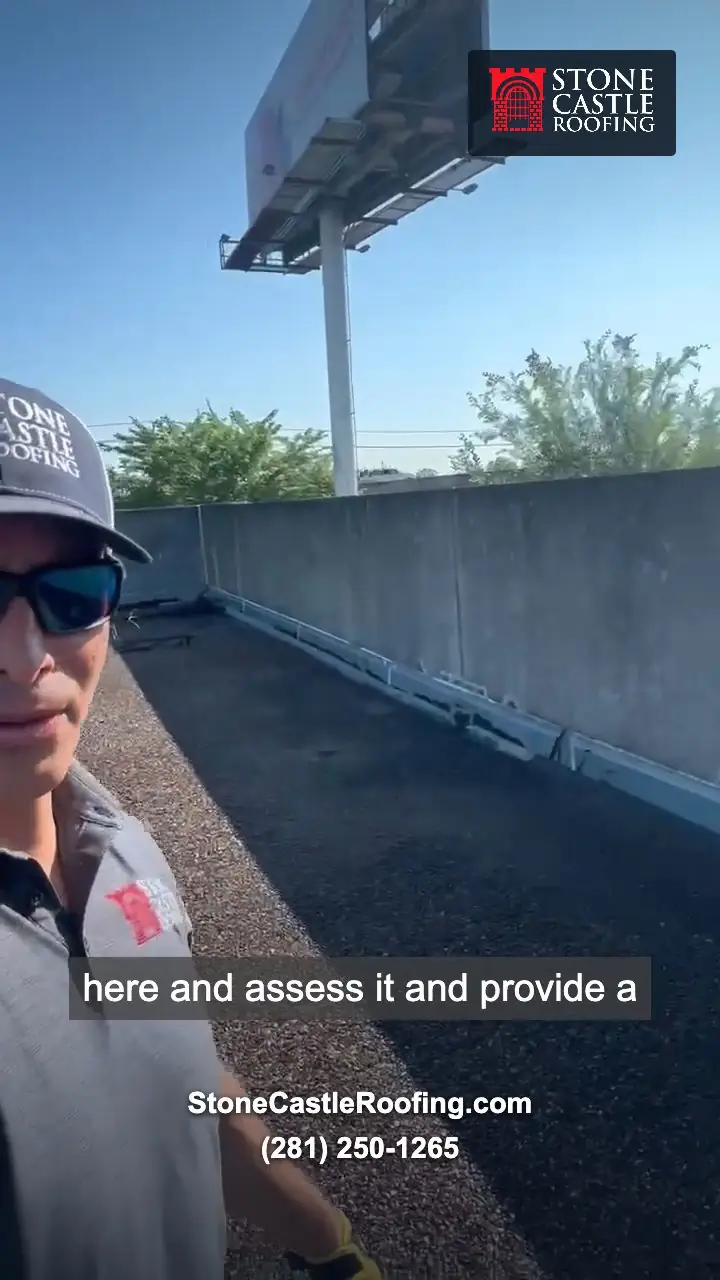
Commercial Roof Leak Assessment
Watch on its own pageRead the transcript
What's going on guys? We are here in the downtown area assessing this built up commercial roof. It is having a lot of leaks so we've been asked to come out here and assess it and provide a solution. Hey guys that's something that we do all day long is assess roofs and provide solutions guys. No job is too small or too big.
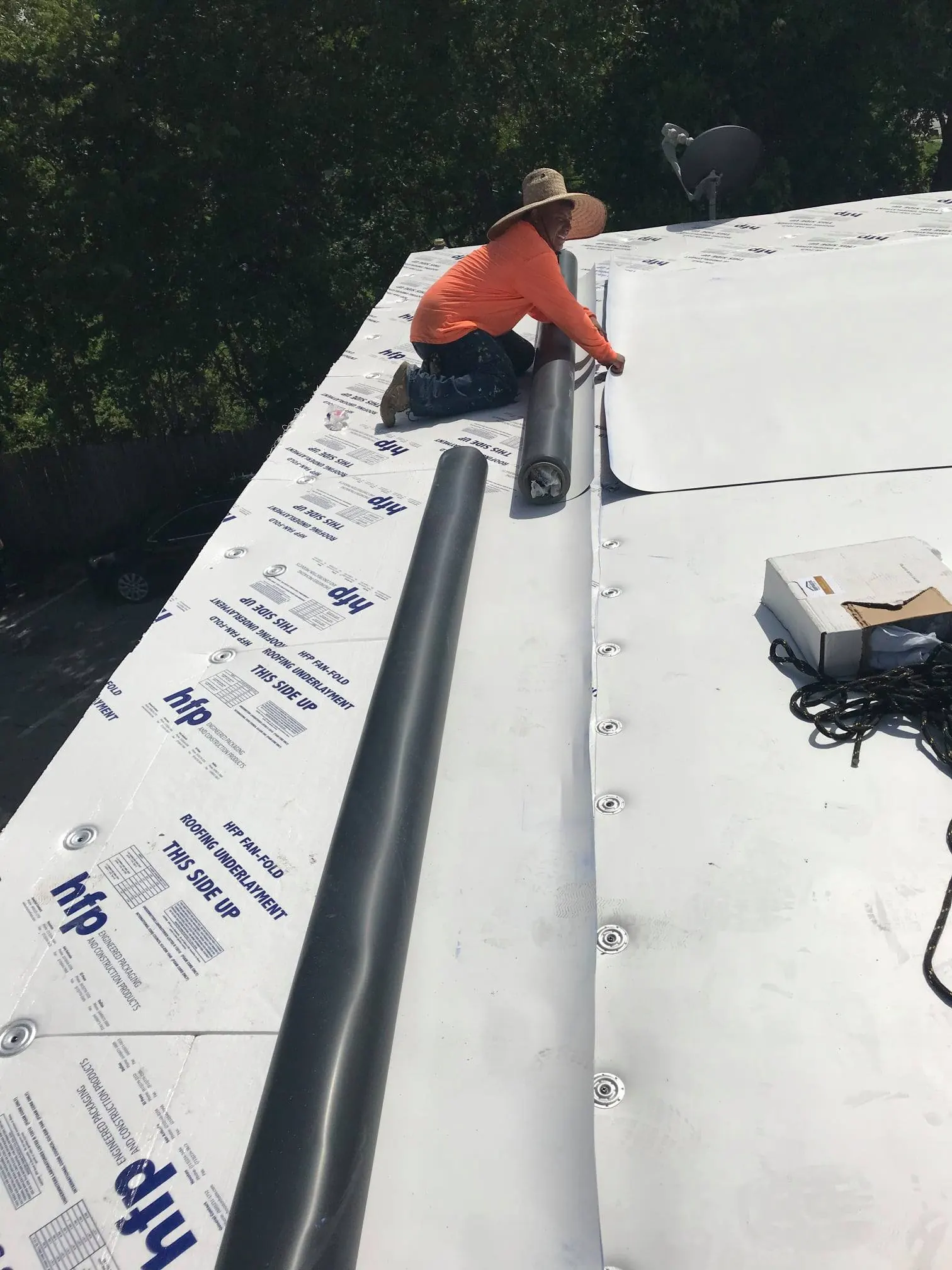
Commercial Roof Systems We Install
We do not push one system, because no single system fits every building. The table below is how the main options stack up in the Houston climate.
| System | What It Is | Strengths in Houston | Typical Lifespan | Best Fit |
|---|---|---|---|---|
| TPO | Single-ply white thermoplastic membrane with heat-welded seams | Reflects sunlight, helps lower cooling loads, strong seams | Typically 15 to 25 years | Retail, office, warehouse, most low-slope roofs |
| Modified Bitumen | Asphalt-based rolls reinforced with polyester or fiberglass, often in 2-ply systems | Tough, puncture-resistant, handles foot traffic | Typically 15 to 20 years | Roofs with rooftop equipment and frequent service traffic |
| Metal | Standing seam or exposed fastener panels | Long life, wind resistance, sheds water fast | Typically 40 years or more | Low-slope to steep buildings, warehouses, churches |
| Coatings / Restoration | Silicone or acrylic coating applied over a sound existing roof | Seals leaks, reflects heat, avoids tear-off | Typically 10 to 15 years, can be recoated | Roofs with good structure but aging surface |
For a deeper look at each option, read our TPO vs mod bit vs metal comparison. For metal on commercial buildings, see our metal roofing page.
TPO Roofing in Houston
TPO is a go-to for flat roofs in our area. The white surface reflects a large share of the sun's heat, and seams are welded with hot air so they become a single sheet. We install TPO mechanically fastened or fully adhered depending on the deck, wind exposure and insulation plan.
Modified Bitumen
Modified bitumen is a multi-ply asphalt system that stands up well to foot traffic, which makes it a good fit for roofs with lots of HVAC units and frequent service visits. A reflective cap sheet or coating helps manage heat on the surface.
Metal and Coatings
Metal panels suit warehouses, churches and buildings with enough slope to shed water quickly. Coatings are a restoration tool, not a fix for a failing roof. Applied over a sound membrane or metal roof, silicone or acrylic coatings seal small leaks and reflect sunlight, and they can often be recoated later.
Flat Roof Repair
Most flat roof leaks start at seams, penetrations, drains and flashing at walls and curbs, and ponding water speeds up all of it. The wet spot on the ceiling is rarely under the hole in the roof. Our commercial roof repair team traces the water back to where it is actually getting in.
Property Types We Serve
- Retail centers and strip centers
- Office buildings
- Warehouses and light industrial
- Multifamily and apartment buildings
- Churches and places of worship
- HOA clubhouses, pool buildings and amenity structures
- Restaurants
Each comes with its own concerns: kitchen exhaust grease on restaurant roofs, foot traffic on HVAC-heavy office roofs and Sunday schedules for churches. We plan around them.
Repair vs Replace vs Restore
Not every aging roof needs to come off. We sort them three ways:
- Repair when damage is limited to specific areas, the membrane is otherwise sound and insulation is dry.
- Restore with a coating when the roof is structurally sound, insulation is mostly dry and the surface is weathered. Restoration can extend service life without full tear-off.
- Replace when insulation is widely saturated, leaks are widespread, the system has reached the end of its life or there are multiple layers already in place.
Core samples and moisture checks help tell which path makes sense. Our post on roof repair vs replacement covers the same logic for residential roofs.
Not sure whether to repair, restore or replace? Call (281) 250-1265 to schedule a free site walk.
Preventive Maintenance Programs
Small problems on flat roofs turn into big ones fast in Houston heat and rain. A maintenance program keeps your roof on a schedule instead of on an emergency call.
A typical program includes:
- Scheduled inspections, often in spring and fall
- Clearing drains, scuppers and gutters
- Checking seams, flashing and penetrations
- Resealing pitch pans and minor repairs as found
- Photo documentation and a written condition report
- A post-storm check after major weather
Regular documentation also helps when you file an insurance claim or plan capital budgets. Property managers with several buildings can keep every roof on one schedule, with condition reports that make it easier to decide which roof needs attention first and which can wait another year.
Storm Response for Businesses
Spring brings hail, and June 1 to November 30 brings hurricane season. After a storm, we help businesses with:
- Emergency tarping or temporary repairs to stop active leaks
- Damage documentation with photos for your insurance carrier
- Meeting with insurance adjusters on site
- Permanent repair or replacement planning
See our storm damage restoration page for more on how we work with adjusters.
How We Bid and Manage Commercial Projects
A commercial job goes wrong when nobody wrote the plan down. Ours runs like this:
- Site walk. We walk the roof and the interior, look at drains, equipment and access, and talk through your goals.
- Core samples where needed. On roofs where we cannot confirm layers or moisture visually, we take cores to see what is underneath.
- Written scope. You get a detailed proposal listing the system, insulation, flashing, drains and any wood or deck repair, so bids can be compared fairly.
- Scheduling around operations. We plan work hours, staging and noisy tasks around your business, tenants or services.
- Safety. Fall protection, controlled access zones and protection for people and vehicles below.
- Cleanup. Daily debris removal and a final cleanup of the roof, grounds and parking areas.
For buildings in Brazoria and Galveston counties and the part of Harris County east of State Highway 146, roofing work generally must meet the windstorm code. We install to that code and coordinate the required inspection when a project needs one.
Commercial Roof Repair and Replacement
Leak tracing, seam and flashing repair, drain fixes and storm damage repair for flat and low-slope roofs.
Full tear-off and new TPO, modified bitumen or metal systems with a written scope and a schedule built around your operations.
We serve commercial properties in Houston, Pearland and throughout our service areas. If you are deciding who to call, our article on residential vs commercial roofers explains what to look for.
Get a written commercial roofing scope. Schedule a free site walk or call (281) 250-1265.
Request a Commercial Roof Site Walk
Tell us about your property and what is going on with the roof, and we will schedule a site walk at a time that works around your operations. You will get a written scope with clear options, whether that is a repair, a restoration or a full replacement.
Frequently Asked Questions About Commercial Roofing
TPO is a popular choice for flat commercial roofs in Houston because its white membrane reflects heat and its heat-welded seams resist leaks. Modified bitumen works well where there is heavy foot traffic, and silicone coatings can restore a sound older roof. The right choice depends on the building, budget and how long you plan to own it.
A commercial TPO roof typically lasts 15 to 25 years in the Houston area. Membrane thickness, installation quality, drainage and maintenance all affect lifespan. Ponding water, heavy foot traffic and skipped inspections can shorten it. Regular inspections, especially after storms, help catch seam and flashing issues before they turn into leaks.
Yes, many commercial roofs can be restored with a silicone or acrylic coating if the structure is sound and the insulation is mostly dry. Restoration seals leaks, adds reflectivity and avoids a full tear-off. Core samples or moisture testing should confirm the roof qualifies, since wet insulation underneath usually means replacement is the better option.
A commercial roof should be inspected at least twice a year, usually in spring and fall, and after any major storm. In the Houston area, heat, heavy rain, hail and hurricane season put steady stress on flat roofs. Routine inspections catch clogged drains, open seams and flashing problems before they cause interior damage.
In most cases, yes. A well-planned commercial roofing project schedules work hours, material staging and noisy tasks around business operations, tenants or services. Safety zones protect people and vehicles below. Interior protection may be needed in spots during tear-off. Discuss your hours and access needs during the site walk so the plan fits your operation.
A core sample is a small cut taken through a commercial roof to see how many layers are present, what the insulation is and whether it is wet. The cut is patched immediately after. Core samples help a contractor decide between repair, restoration, and replacement, and they make bids more accurate and comparable.
Many do, and the property address decides it. Brazoria County, where most of Pearland sits, is inside the TWIA designated catastrophe area, so roofing work there generally must meet the windstorm building code and pass an inspection for a WPI-8 certificate from the Texas Department of Insurance. Not every repair falls under that rule, so confirm the requirements for your building with TDI before the scope is finalized.
Ready When You Are
Free roof inspections. No pressure, no surprises.