
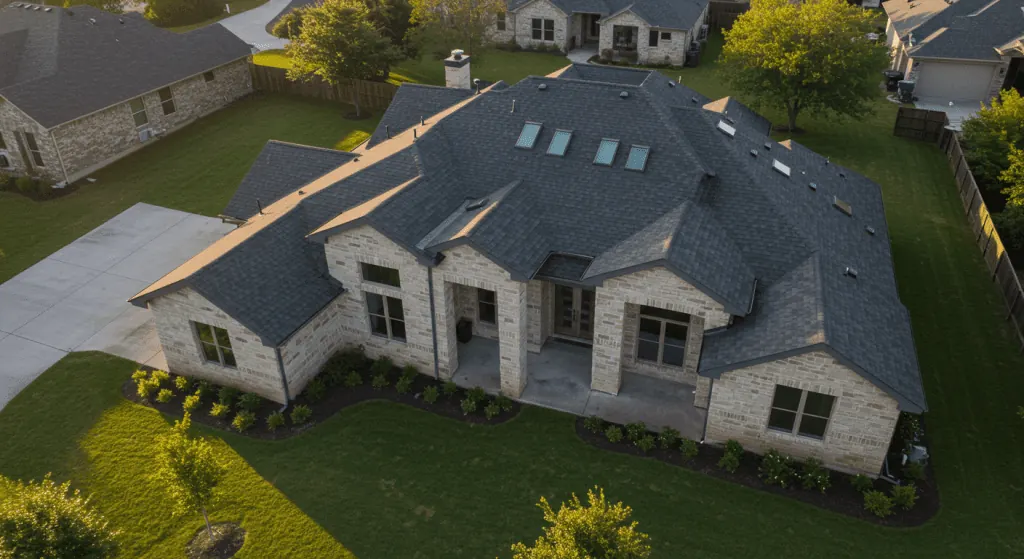
Shingle Roofing
Architectural Shingle Roofs in Houston and Pearland
Wind-rated, impact-resistant shingle roofs installed as a complete system by a locally owned Pearland crew. Our team brings 20+ years of combined roofing industry experience.
- 5.0 stars from 100+ Google reviews
- GAF Certified Plus contractor
- BBB Accredited, A+ rating
- Locally owned in Pearland
If you are planning a shingle roof replacement in Houston or Pearland, the most important choice is the shingle itself: architectural shingles outlast 3-tab, and Class 4 impact-resistant shingles add hail resistance. Whichever you pick, it only performs as well as the full system under it, from underlayment and flashing to ventilation.
Stone Castle Roofing is a locally owned Pearland roofer and a GAF Certified Plus contractor. We install architectural and Class 4 impact-resistant shingles as a full system, and we start every project with a free roof inspection.
Are architectural shingles a good choice for Houston homes?
Yes. Architectural shingles are thicker and heavier than 3-tab shingles, carry higher wind ratings and typically last 20 to 30 years in the Houston climate when installed with proper ventilation. Upgrading to Class 4 impact-resistant shingles adds hail protection. The full roof system underneath, from decking to flashing, matters as much as the shingle itself.
Watch
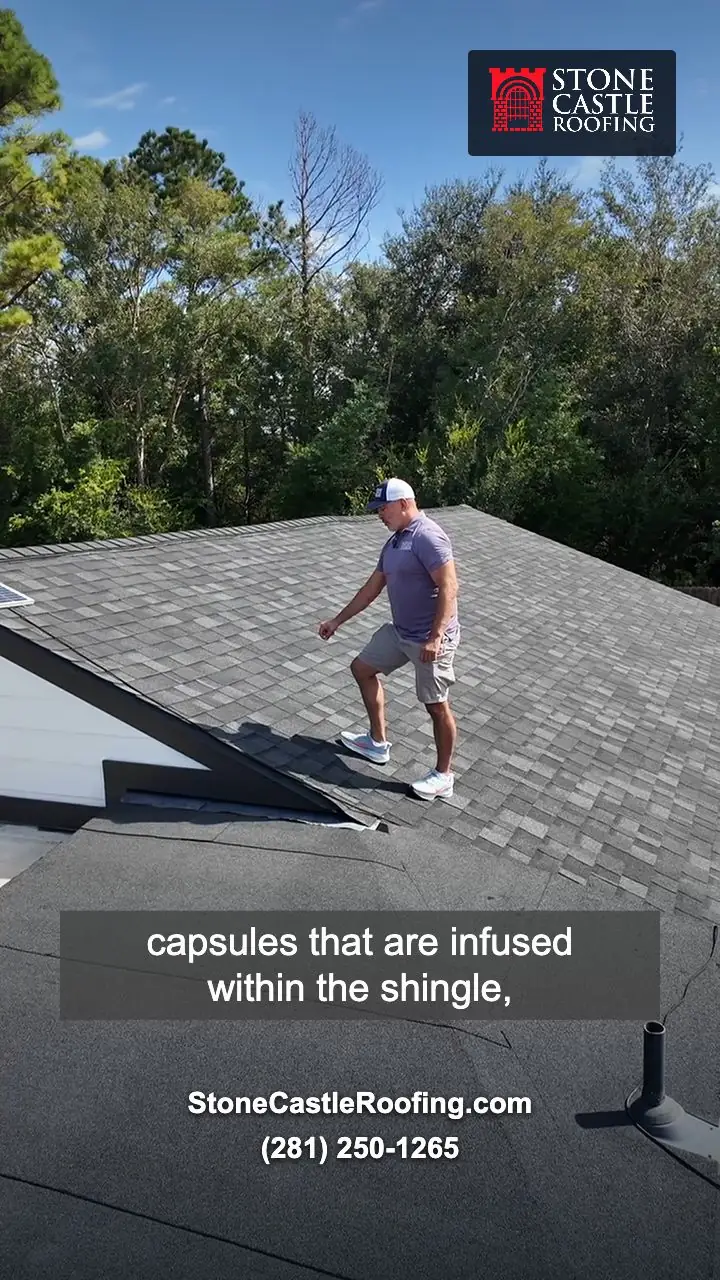
How a Shingle Roof System Works: Overlaps, Nails, and Underlayment
Watch on its own pageRead the transcript
All right guys, I want to explain to y'all how a shingle roof system works. If you look over here, you see one piece of shingle. Well, this shingle is really about this big over here. You can't see it because it's underneath this area here. So for this shingle, there is a group of nails that go underneath this one, underneath this one, and then you have a strong sealant that's underneath this area over here. So this shingle is being adhered over here, over here and over here. All right, this is also a luxury shingle, meaning that it's a class three impact-rated shingle. So it can withstand one and three fourths inch hail. And it also has bits of copper capsules that are infused within the shingle, which prevent any type of algae growth and mold growth. The wind warranty on here is about 130 miles per hour which makes it a great shingle whereas other regular 30 year roof shingles can withstand about 110. Depending on the manufacturers they offer excellent warranties on them as well but it's a very very good roof system it will last you a long time, but you need to know the difference between a regular 30 year, a class three impact, and a class four impact. And it's not just the shingle, it's everything that's underneath as well, such as the synthetic underlayments, the ice and water barriers, the pipe jacks. There's a lot more that goes into it, all right?
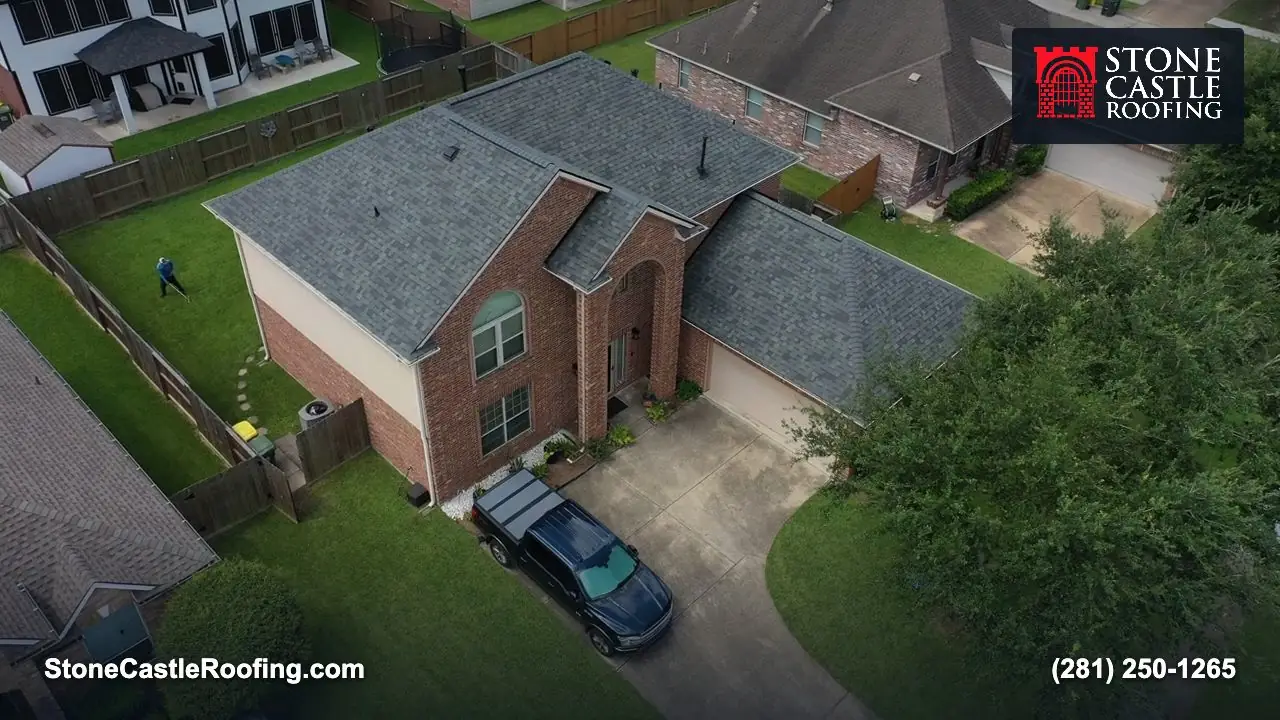
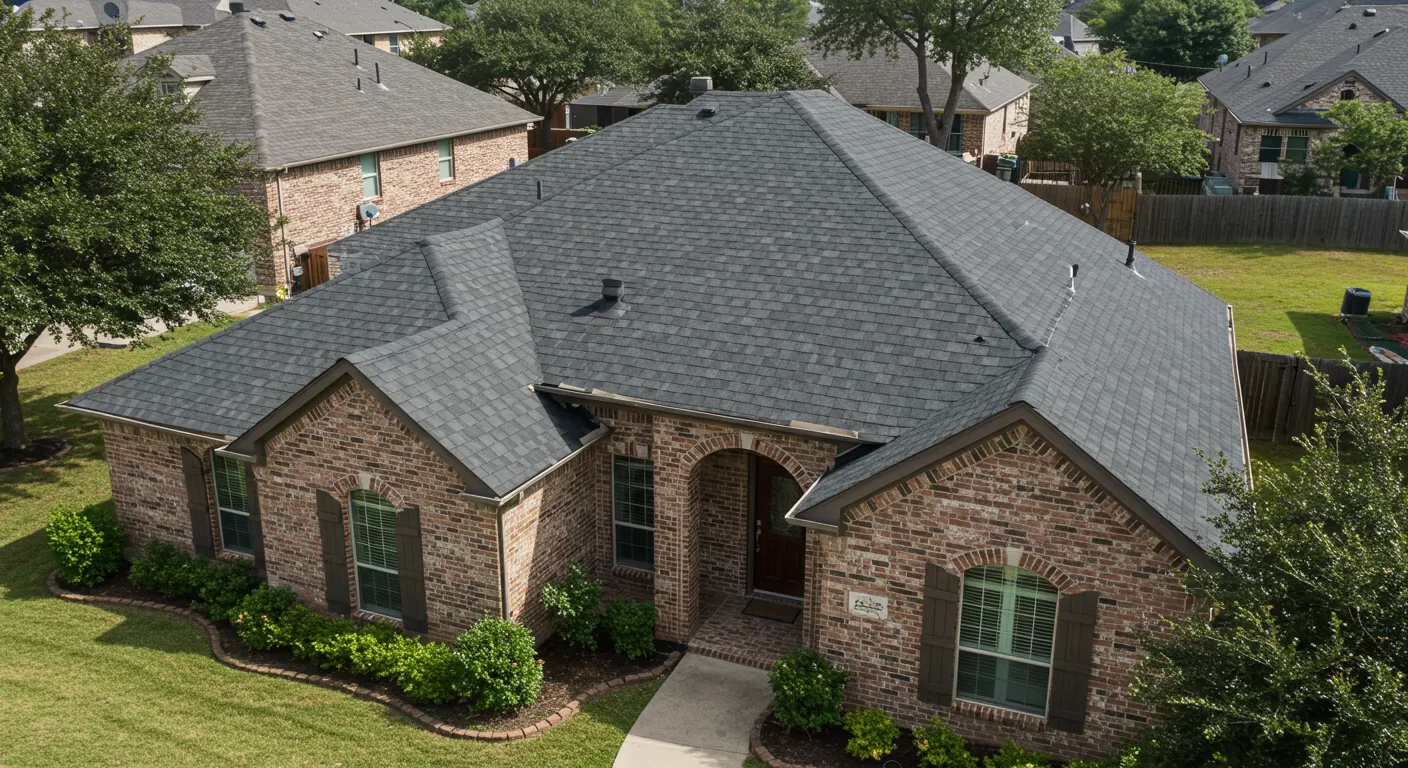
Residential Shingle Roof: Aerial Project Views
Watch on its own pageRead the transcript
[Instrumental music]
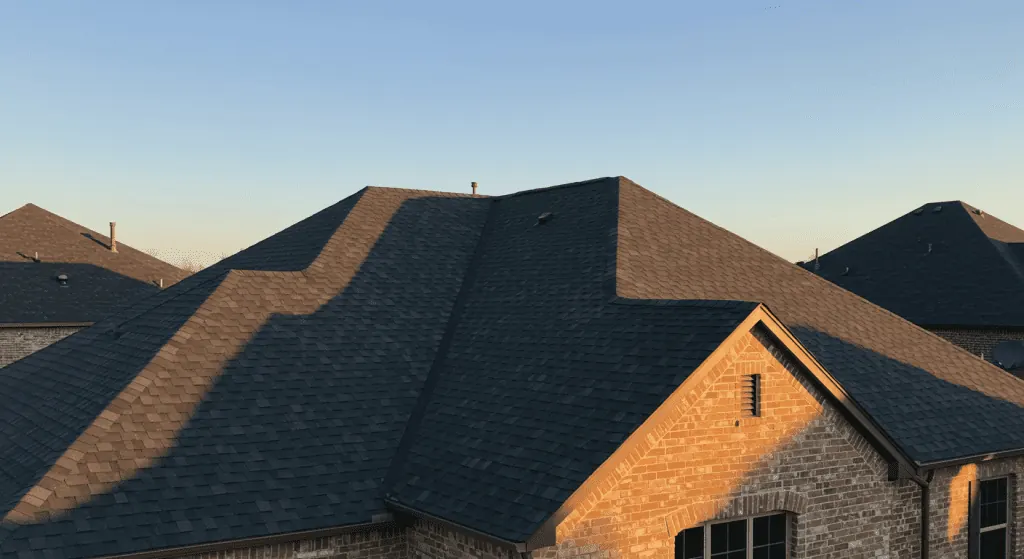
Architectural vs 3-Tab Shingles
Architectural shingles (also called dimensional or laminated shingles) are made of 2 bonded layers, which gives them a thicker profile and a textured, shadowed look. 3-tab shingles are a single flat layer cut into 3 tabs. Many manufacturers have scaled back 3-tab lines, and most Houston homeowners now choose architectural.
| Feature | Architectural Shingles | 3-Tab Shingles |
|---|---|---|
| Construction | 2 laminated layers | Single flat layer |
| Look | Dimensional, shadowed texture | Flat, uniform rows |
| Typical wind rating | Often rated to 110 to 130 mph, higher with enhanced nailing | Commonly rated around 60 to 70 mph |
| Typical lifespan in Houston | 20 to 30 years | 15 to 20 years |
| Weight | Heavier, better resists lift | Lighter, more prone to blow-off |
| Resale appeal | Strong | Dated on most homes |
| Relative cost | Moderate | Lower |
For most homes we roof, architectural shingles are the baseline. If you are weighing shingles against a longer-lived material, our metal roof vs shingles comparison for Houston walks through the tradeoffs.
Class 4 Impact-Resistant Shingles
Class 4 is the highest impact rating under the UL 2218 test, which drops steel balls onto shingles to simulate hail. Class 4 shingles are built with modified asphalt or reinforced backing so they flex instead of cracking when hail hits.
Spring hail is a real risk around Pearland and southeast Houston. A Class 4 roof will not make your home hail-proof, but it holds up better to the moderate hail that bruises standard shingles. Some insurance carriers offer premium credits for Class 4 roofs, so ask your agent what your policy allows. Read more in our guide to Class 4 impact-resistant shingles in Texas.
Wind Ratings for Gulf Storms
Hurricane season runs June 1 to November 30, and tropical storms do not need to make landfall nearby to rip shingles loose. Wind performance depends on 3 things:
- The shingle's rated wind resistance. Many architectural lines carry high wind ratings when installed to the manufacturer's high-wind specification.
- Nailing pattern. High-wind installs use more nails per shingle, placed in the reinforced nailing strip.
- Edges and starter. Most blow-offs begin at eaves and rakes, so sealed starter strip and proper drip edge matter.
Brazoria County holds most of Pearland, and the county is inside the Texas Windstorm Insurance Association (TWIA) designated catastrophe area. Roof replacements there generally must meet the windstorm building code and be inspected for a WPI-8 certificate of compliance from the Texas Department of Insurance. We install to the windstorm code and coordinate the required inspection when your project needs one. See our WPI-8 windstorm certification guide for details.
The Full Roof System We Install
Shingles are the part you see. The layers underneath decide whether the roof keeps water out for decades. Every Stone Castle shingle roof includes:
- Decking check. After tear-off, we walk and inspect the plywood or plank decking and replace soft, rotted or delaminated sections before anything goes on top.
- Synthetic underlayment. Stronger and more tear-resistant than old felt paper, and it stays put if wind hits before shingles go down.
- Ice and water membrane at valleys and penetrations. A self-adhering membrane in valleys and around pipes, vents and chimneys, where water concentrates and leaks start.
- Drip edge. Metal edging at eaves and rakes that directs water into the gutters and protects the deck edge.
- Starter strip. Adhesive starter shingles at the edges to lock down the first course against wind lift.
- Ridge vent and attic ventilation. Balanced intake and exhaust so the attic can breathe, which lowers heat buildup and protects the shingles from cooking underneath.
- New flashing. Fresh step flashing and counter flashing at walls and chimneys instead of reusing tired metal.
- Pipe boots. New boots on every plumbing vent, since cracked boots are one of the most common leak sources we find on roof repair calls.
Want to see what is under your shingles? Schedule a free inspection or call (281) 250-1265.
Choosing a Shingle Color for Texas Heat
Color affects more than curb appeal. Darker shingles absorb more heat, which can raise attic temperatures and add load on your AC. Lighter grays, weathered woods and tans reflect more sunlight. Some manufacturers also offer reflective granule lines that help keep roof surface temperatures lower.
We bring physical samples to your home so you can see colors in real Pearland sunlight against your brick and trim. If you belong to an HOA, check approved colors before you choose.
Signs You Need a New Shingle Roof
- Shingles curling, cupping or cracking
- Bald spots or heavy granule loss in gutters
- Missing shingles after a storm
- Hail bruises or dents on vents, gutters and soft metals
- Water stains on ceilings or in the attic
- Daylight through attic boards or a sagging roofline
- The roof is 20 years old or more
If you are not sure whether to fix or replace, our article on roof repair vs replacement covers the decision. After a hailstorm, start with our storm damage restoration team, since we work with insurance adjusters on storm claims.
How Long Does Shingle Replacement Take?
Most single-family shingle replacements in the Houston area take 1 to 3 days of work on the roof. Larger homes, steep pitches, multiple layers to tear off or major decking repair can add time. Rain delays are common in Houston, and we will not leave a roof open when weather is moving in. When a windstorm inspection is required, it gets scheduled during the project.
Our Shingle Roof Process
- Free inspection. We check the roof, attic, ventilation and decking from the inside and out.
- Written estimate. You get a line-by-line scope covering materials, ventilation, flashing and any decking allowance. Our roof replacement cost guide explains what drives the number.
- Material and color selection. Pick your shingle line and color from samples.
- Prep and protection. We protect landscaping, driveways and AC units before tear-off.
- Tear-off and decking repair. Old roof comes off down to the deck, and damaged wood is replaced.
- Installation. Full system install, from underlayment to ridge vent.
- Cleanup and walkthrough. Magnetic sweeps for nails, debris hauled off and a final walkthrough with you.
We install shingle roofs throughout Pearland, Houston and Friendswood. Browse finished homes on our projects page.
Ready for a stronger shingle roof? Schedule a free inspection or call (281) 250-1265.
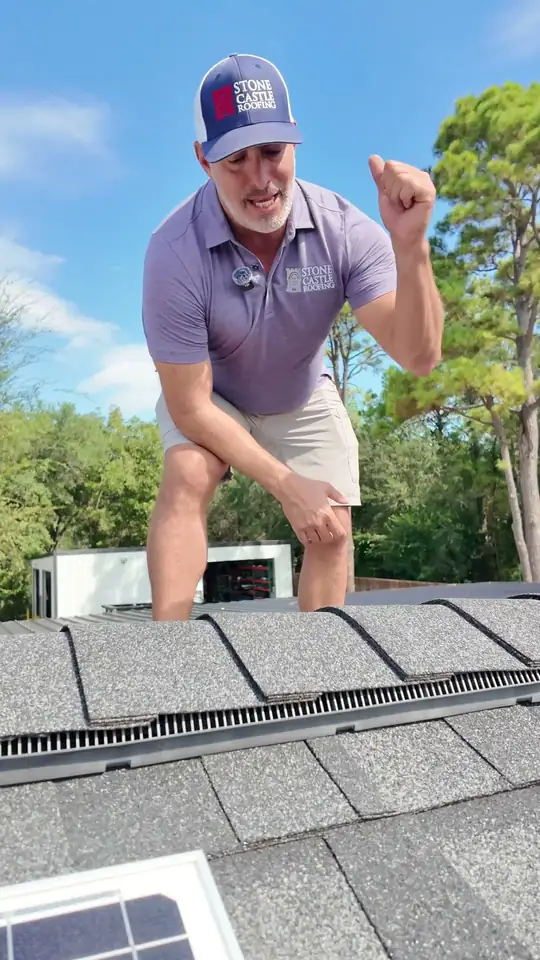
Watch
Shingles are only part of the system. Our team shows how a ridge vent moves hot air out of the attic.
 Short
How Does a Ridge Vent Work? Roof Ventilation Explained
Frequently Asked Questions About Architectural Shingle Roofing
Architectural shingles typically last 20 to 30 years in the Houston area. Intense heat, UV exposure and humidity can shorten that, especially when attic ventilation is poor. A properly vented attic, quality underlayment and correct nailing help a shingle roof reach the upper end of its expected life in Pearland and Greater Houston.
Class 4 shingles are often worth it in Pearland because spring hail is common in southeast Texas. They carry the highest impact rating under UL 2218 and resist the moderate hail that bruises standard shingles. Some insurers offer premium credits for Class 4 roofs, so ask your agent how your policy treats them.
Many architectural shingles are rated for winds of roughly 110 to 130 mph, and some lines rate higher when installed with the manufacturer's high-wind nailing pattern. Real-world performance also depends on starter strip, drip edge and proper sealing. Edges are where most wind damage starts, so installation details matter as much as the rating.
For most Pearland addresses, yes. The bulk of the city is in Brazoria County, inside the TWIA designated catastrophe area, and a roof replacement there generally must meet the windstorm building code and be inspected for a WPI-8 certificate from the Texas Department of Insurance. Confirm your own address with TDI, since the county line runs through town. Your roofer should install to the code and schedule that inspection.
Installing shingles over an existing layer is sometimes allowed by code, but a full tear-off is usually the better choice in Houston. Tear-off lets the roofer inspect and repair the decking, install new underlayment and flashing and avoid trapping heat and moisture. An overlay can also hide problems and add weight to the structure.
Lighter shingle colors such as light gray, tan and weathered wood reflect more sunlight than black or dark brown, which can help reduce attic heat. Some manufacturers offer reflective shingle lines designed for hot climates. Check HOA color rules first, and view physical samples outside in daylight before choosing.
A typical single-family shingle roof replacement in the Houston area takes 1 to 3 days on the roof. Steep pitches, multiple layers to remove, large decking repairs or rain can extend the timeline. Homes in windstorm areas may also need an inspection scheduled during the project before the job is fully closed out.
Ready When You Are
Free roof inspections. No pressure, no surprises.