
Hail Damage Roof Insurance Claim in Texas: A Step by Step Guide
What to do after hail hits your Pearland or Houston home: safety, photos, temporary protection, inspection, policy terms, the adjuster visit, and storm chasers.
What should I do after hail damages my roof in Texas?
After hail, stay safe, photograph the damage, and cover any openings to prevent more water getting in. Get a roof inspection from a local roofer, then review your policy for deductible type and whether it pays actual cash value or replacement cost. File the claim with your insurance company promptly and be present for the adjuster visit.
Spring hail is part of life in Pearland and Houston. Some storms pass with nothing more than noise. Others leave bruised shingles, dented vents, and cracked tiles that you cannot see from the driveway but that will show up as leaks months later.
The steps below are in the order we would do them. This is general information from a roofer's point of view, not legal or insurance advice. Your policy and your insurance company decide what is covered, so read your policy and ask your agent or carrier when something is unclear.
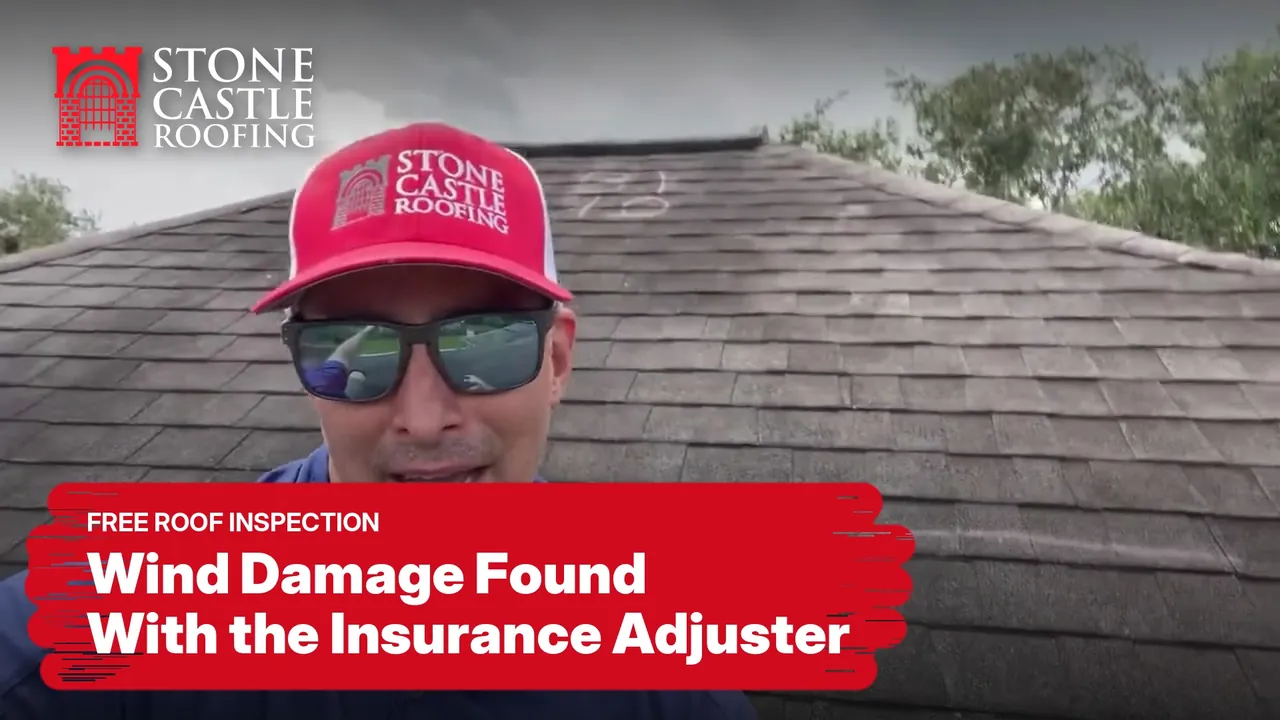
Wind Damage Roof Inspection With the Insurance Adjuster in Pearland
Read the transcript
Hey, guys. We are out here in Pearland, Texas. We just met with an insurance adjuster. We did an inspection on this roof and found wind damage. A lot of people don't know that wind damage is not just when the shingles fly off. It's also situations like this. See this black line running across this area? That's a crease from wind damage. The wind pushes the shingle loose, and over time it damages the shingle. So if you have not had an inspection in the past five years, or after a hard storm, give me a call. I'll come out and do a free inspection. If it's something we can make an insurance claim on and get you a brand new roof minus the deductible, we will take care of you. Stone Castle Roofing, (281) 250-1265.
In this article
Step 1: Stay safe and stay off the roof
Wet, damaged roofs are slippery and can have weak spots you cannot see. Leave roof walking to professionals with fall protection.
- Check inside for active leaks, wet ceilings, or sagging drywall
- Keep clear of downed power lines and report them to your utility
- Move valuables away from leaks and put out buckets or towels
- If water is near light fixtures or outlets, shut off power to that area
Step 2: Document the damage and prevent more
Document everything
Good records make the claim process smoother. The Texas Department of Insurance recommends photographing damage, keeping receipts, and keeping a log of everyone you talk to at your insurance company.
- Take dated photos and video of hail on the ground (a coin or ruler helps show size)
- Photograph dents on gutters, downspouts, vents, AC units, mailboxes, and cars
- Photograph interior water stains and wet areas
- Write down the date and time of the storm
- Keep damaged items until your insurer says you can discard them
Add temporary protection
Most policies expect you to take reasonable steps to keep damage from getting worse. That usually means tarping holes, covering broken skylights, and drying out wet areas. Your policy may pay for these temporary repairs, so save every receipt.
Hold off on permanent repairs until the adjuster has seen the damage. If you need emergency tarping, our storm damage restoration crew can help.
Step 3: Get a professional roof inspection
Hail damage is easy to miss from the ground. Bruised shingles, cracked mat underneath the granules, and broken seal strips often only show once you are on the roof.
A local roofer can tell you whether there is damage worth claiming before you file. If the damage is minor and falls under your deductible, you may decide a claim is not worth filing. Stone Castle Roofing offers free roof inspections with photos of what we find, and we are glad to tell you when we do not see storm damage.
If the roof does need to be replaced, it is a good time to consider Class 4 impact-resistant shingle roofing or metal roofing, which tend to stand up better to the next hail storm. Smaller damage can often be handled with a straightforward roof repair.
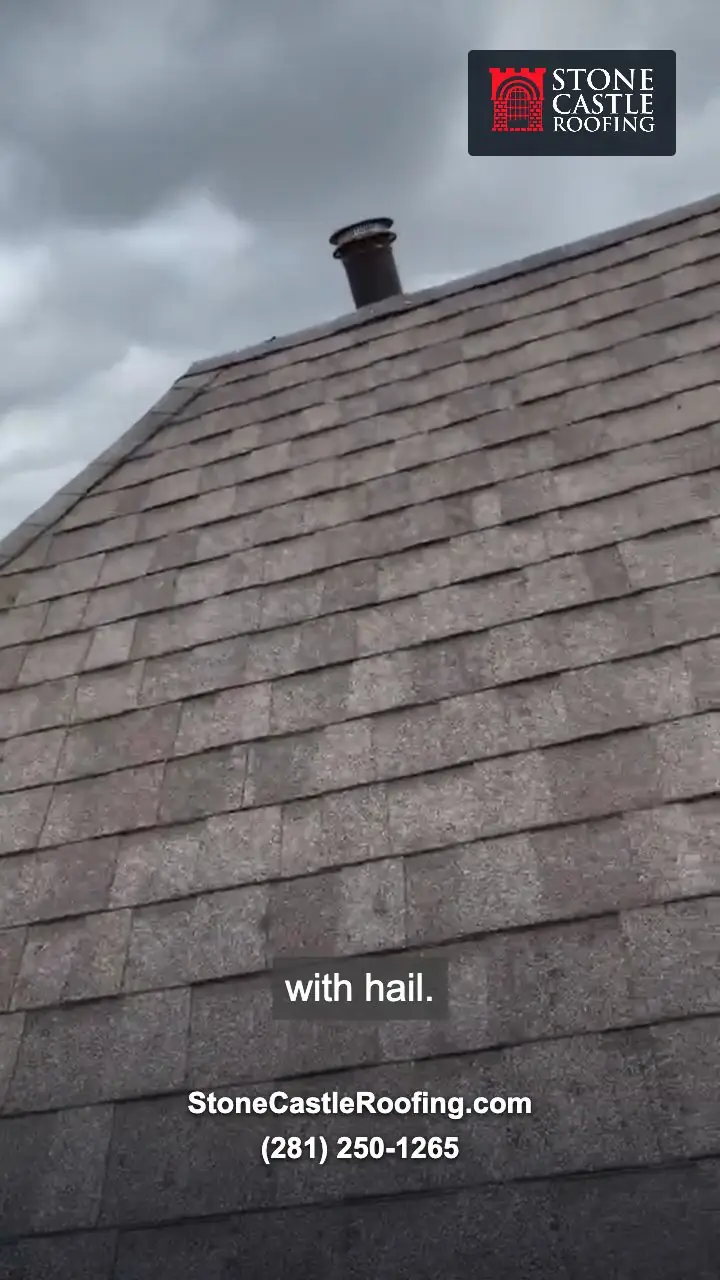
Hail Damage Roof Inspection in Pearland, Texas
Read the transcript
We are out here in Pearland again working these roofs. If you haven't had a roof inspection, please give me a call. I just want to show you all the extent of what this damage did. Look at that. That's all hail over there. This whole entire roof is just riddled with hail. Look at that. This is all here in the Pearland area so if you want a free inspection give me a call Stone Castle Roofing 281-250-1265.
Step 4: Understand your policy before you file
A few policy terms decide much of what you receive. Look for them on your declarations page or ask your agent.
Deductible type
Many Texas homeowners policies use a separate wind and hail deductible. It may be a flat dollar amount or a percentage deductible, which is a percentage of your home's dwelling coverage, not of the claim. On a higher value home, a percentage deductible can be larger than many people expect. Texas law also makes it illegal for a contractor to offer to waive, rebate, or absorb your deductible, and your insurer may ask for proof you paid it.
Actual cash value vs replacement cost
| Coverage type | How it generally pays for your roof |
|---|---|
| Replacement cost value (RCV) | Pays to replace the roof with similar materials, after the deductible you are responsible for. Some policies pay in 2 parts, holding back depreciation until the work is done. |
| Actual cash value (ACV) | Pays replacement cost minus depreciation for age and wear, after the deductible you are responsible for. On an older roof, the payment can be much lower. |
Roof payment schedules
Some policies use a roof schedule that pays a set percentage of the roof's value based on its age and material. If you see this language, ask your agent how it would apply to your roof.
Step 5: File the claim and meet the adjuster
File with your insurance company
The Texas Department of Insurance advises filing as soon as possible after a storm. Policies set their own reporting requirements, so check yours and do not wait. When you call or file online:
- Give the date of the storm and a short description of the damage
- Share your photos and the inspection findings
- Write down your claim number and the name of everyone you speak with
- Ask what the next steps are and when to expect the adjuster
Meet the adjuster, with your roofer if you want
The insurance adjuster will inspect the roof and write an estimate. You can ask your roofer to attend. A roofer at the meeting can point out damage, share photos, and make sure nothing is missed, such as damaged vents, flashing, or gutters.
There is a limit, though. Texas law does not allow a roofer to act as a public adjuster on a claim for work they are doing. That means a contractor cannot negotiate your settlement or claim to represent you on coverage. Your roofer documents the damage and the work; you and your insurance company handle the claim.
Supplements
Once the roof is opened up, the crew may find items that were not visible during the adjuster visit, like damaged decking or code required components. Your roofer can document these with photos so the additional cost can be submitted to the insurance company for review. The insurer decides whether to pay.
If you disagree with the estimate
Sometimes the adjuster's estimate misses damage or leaves out items your roofer found. Start by asking your insurance company to explain how they reached their numbers, and send any added photos or documentation. Your policy describes the options available when you and the insurer disagree. If you have questions about your rights, the Texas Department of Insurance has a consumer help line and can explain the general process.
Step 6: Avoid storm chasers and bad contracts
After big hail, out of town crews knock on doors across Pearland and Houston. Some do fine work. Many disappear when problems show up. Watch for:
- Offers to waive or cover your deductible (illegal in Texas)
- Promises to get you a new roof or to "handle everything" with your insurer
- Pressure to sign the same day, or contracts with blank spaces
- Any document asking you to sign over your claim rights or insurance payments to the contractor
- Large payments up front before materials arrive
The Texas Department of Insurance also suggests getting more than one estimate and not making final payment until work is complete. Our full list of storm chaser roofer red flags covers more.
A windstorm note for coastal counties
All of Brazoria and Galveston counties, plus the part of Harris County east of State Highway 146, sit in the Texas Windstorm Insurance Association (TWIA) designated catastrophe area. Much of Pearland and part of Friendswood fall in that area. If your wind coverage is through TWIA, roof work generally must be inspected and certified to the windstorm building code to keep your eligibility. Not every repair requires an inspection, so confirm for your address with the Texas Department of Insurance. Stone Castle Roofing installs to the windstorm code and coordinates the required inspection when a project needs one. Our WPI-8 windstorm certification guide explains the process.
Talk to a Pearland roofer
Stone Castle Roofing is locally owned and works with insurance adjusters on storm claims across Pearland, Friendswood, and Greater Houston. If hail just came through your neighborhood, schedule a free inspection or contact us. If you would rather talk it through first, call (281) 250-1265. We will show you what we find, including when there is nothing worth claiming.
Frequently Asked Questions
Hail damage is often hard to see from the ground. Common signs include dented gutters, vents, or AC units, granules collecting at downspouts, and dark bruises or missing granules on shingles. Interior water stains can show up weeks later. A professional roof inspection with photos is the most reliable way to confirm whether hail damaged your roof.
No. Texas law makes it illegal for a contractor to offer to waive, rebate, or absorb a property owner's insurance deductible. Your insurance company may ask for proof that you paid it. A contractor who offers to cover your deductible is breaking state law, which is a strong sign to look for a different roofer.
Replacement cost value coverage generally pays what it costs to replace your roof with similar materials, after the deductible you are responsible for. Actual cash value coverage subtracts depreciation for the roof's age and wear, so an older roof may receive much less. Check your declarations page or ask your agent which type your policy uses.
You can ask your roofer to attend, and many homeowners find it helpful. A roofer can point out damage, share photos, and make sure items like vents, flashing, and gutters are noted. In Texas, a roofer cannot act as your public adjuster or negotiate your settlement, so you and your insurer still handle the claim.
It can. Pearland is mostly in Brazoria County, which is in the TWIA designated catastrophe area. If your wind coverage is through TWIA, roof work generally must be inspected and certified to the windstorm building code. Not every repair requires an inspection, so confirm for your address with the Texas Department of Insurance before work begins.
Related articles
Storm Chaser Roofers: 9 Red Flags Houston Homeowners Should Know
After a Houston hail storm or hurricane, out-of-town crews show up fast. Learn the red flags of storm chaser roofers and how to vet a roofer in 10 minutes.
7 min read
WPI-8 Windstorm Certification for Your Roof: A Pearland Homeowner's Guide
Replacing a roof in Brazoria, Galveston, or coastal Harris County? Here is what WPI-8 windstorm certification means, when you need it, and how to get it.
8 min read
Class 4 Impact-Resistant Shingles in Texas: Are They Worth It?
What does Class 4 really mean, and will it lower your Texas insurance bill? A Pearland roofer explains UL 2218, hail performance, cost, and who should buy.
8 min read
About Stone Castle Roofing
Stone Castle Roofing is a locally owned roofing contractor in Pearland, TX, serving homeowners and businesses across Greater Houston. We are a GAF Certified Plus contractor and every project starts with a free roof inspection.