
WPI-8 Windstorm Certification for Your Roof: A Pearland Homeowner's Guide
Replacing a roof in Brazoria, Galveston, or coastal Harris County? Here is what WPI-8 windstorm certification means, when you need it, and how to get it.
What is a WPI-8 windstorm certification for a roof?
A WPI-8 is a certificate of compliance from the Texas Department of Insurance showing that roof work was inspected while in progress and meets the windstorm building code. In the TWIA catastrophe area, which includes all of Brazoria and Galveston counties, most homes need this certificate to qualify for a TWIA windstorm policy.
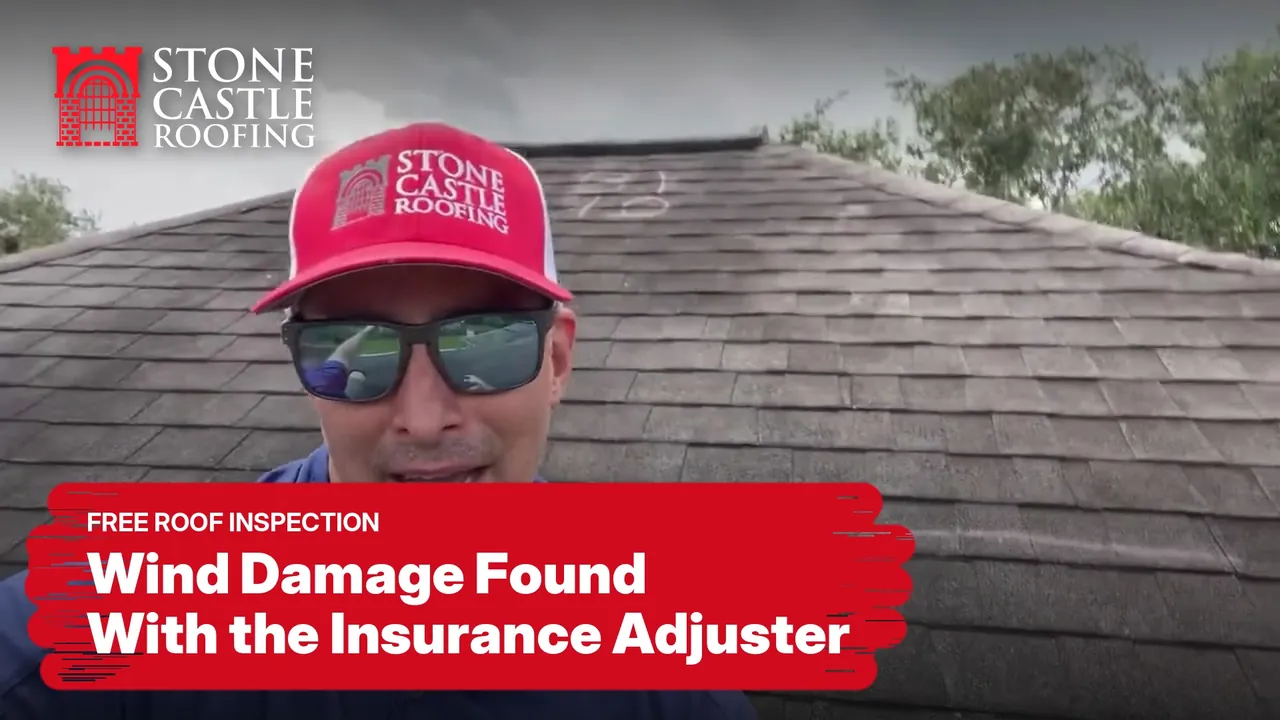
Wind Damage Roof Inspection With the Insurance Adjuster in Pearland
Read the transcript
Hey, guys. We are out here in Pearland, Texas. We just met with an insurance adjuster. We did an inspection on this roof and found wind damage. A lot of people don't know that wind damage is not just when the shingles fly off. It's also situations like this. See this black line running across this area? That's a crease from wind damage. The wind pushes the shingle loose, and over time it damages the shingle. So if you have not had an inspection in the past five years, or after a hard storm, give me a call. I'll come out and do a free inspection. If it's something we can make an insurance claim on and get you a brand new roof minus the deductible, we will take care of you. Stone Castle Roofing, (281) 250-1265.
In this article
Why windstorm certification matters on the Gulf Coast
If you live in Pearland, Friendswood, League City, or the coastal side of Harris County, your roof does more than keep the rain out. It is also a big part of whether your home can get windstorm coverage at all.
Many homeowners along the coast cannot buy wind and hail coverage from a private insurer. For them, the Texas Windstorm Insurance Association (TWIA) is the backstop. TWIA requires that most homes be certified as meeting the windstorm building code, and a roof replacement is one of the most common reasons a new certificate is needed.
The paperwork is less confusing than it looks. Below: what the catastrophe area is, what WPI-8 and WPI-8-E mean, when roof work needs an inspection, and how the process works when you hire a roofer for a roof replacement.
What the TWIA catastrophe area is
TWIA calls its coverage area the "designated catastrophe area." It is the part of the Texas coast where the state has found that wind and hail insurance is not reasonably available on the private market.
According to TWIA, the area currently includes:
- All 14 first tier coastal counties, including Brazoria and Galveston counties
- Parts of Harris County east of State Highway 146 (TWIA lists areas such as La Porte, Morgan's Point, Pasadena, Seabrook, and Shore Acres when inside city limits and east of 146)
For our neighbors, that breaks down like this:
| Area | County | In the catastrophe area? |
|---|---|---|
| Most of Pearland | Brazoria | Yes |
| Pearland portions in Harris or Fort Bend | Harris, Fort Bend | Generally no |
| League City | Galveston | Yes |
| Friendswood (Galveston County side) | Galveston | Yes |
| Friendswood (Harris County side) | Harris | Generally no |
| Alvin and Manvel | Brazoria | Yes |
County lines and city limits do not always match, so confirm your exact address with the Texas Department of Insurance (TDI) or your insurance agent before you assume either way. If you are in the Pearland area and not sure where you fall, our Pearland roofing page covers the local details.
WPI-8 vs. WPI-8-E: what the forms mean
Both forms are certificates of compliance issued by TDI. The difference is timing.
- WPI-8: For new and ongoing work. A TDI-appointed Texas licensed professional engineer or a TDI windstorm inspector inspects the work while it is being done.
- WPI-8-E: For completed work. A Texas licensed professional engineer evaluates the finished structure after the fact. TDI notes this is harder to do and may cost more.
- WPI-8-C: An older certificate TWIA issued for completed work between 2017 and 2020. You may still see it on older homes.
For a roof replacement, the WPI-8 path is the one you want. The inspector can see things like deck attachment and fastening before the new roof covers them up. Once shingles or metal panels are on, verifying what is underneath gets much harder.
Buying a home in Pearland, League City, or Alvin? Ask the seller for the most recent windstorm certificate on the roof, and check it against TDI's online certificate search. If the roof looks newer than the certificate on file, that is a good question to raise before closing.
When roof work needs an inspection
Not every roof job triggers a windstorm inspection. Based on TDI and TWIA guidance:
- Generally needs an inspection: Replacing a roof, or repairing a significant portion of it.
- Generally does not: Roof repairs under 100 square feet that do not involve the decking, gutter repair or replacement, and temporary repairs after a storm (like tarping).
A "square" in roofing is 100 square feet, so the TDI cutoff is roughly one square of repair without touching the deck. A small roof repair to fix a few blown-off shingles usually falls under that line. A full tear-off and re-deck does not.
After a hurricane or tropical storm, the sequence counts. A tarp or emergency patch to stop water from getting in is a temporary repair and generally does not need certification. The permanent repair or replacement that follows is a different story. If that permanent work is a significant portion of the roof, plan for the inspection before the crew shows up, even if the insurance claim is still being worked out.
When in doubt, ask before work starts. It is easy to schedule an inspection up front and very hard to fix a missed one later.
What happens if you skip it
Skipping the windstorm inspection might save a few days on paper. It can cost you far more later.
TWIA eligibility. TWIA says coastal properties must be certified as meeting the windstorm code in their area. Without a certificate, a home may be considered uninsurable by TWIA. If you rely on TWIA for wind and hail coverage, that is a serious gap during hurricane season, which runs June 1 to November 30.
Resale. Buyers, their agents, and their insurers in the catastrophe area often ask whether the roof has a current certificate. A missing one can slow a closing or become a negotiating point.
Fixing it after the fact. If the work was never inspected, the fallback is usually a WPI-8-E from an engineer evaluating the finished roof. That can mean more cost and sometimes opening up parts of the roof so the engineer can see how it was built.
How the process works with your roofer
On a typical roof replacement in the catastrophe area, the steps look like this:
- Confirm the address. Your roofer and you confirm the home is inside the catastrophe area and that the scope of work needs certification.
- Choose code-compliant products and methods. The roof system, fasteners, and installation pattern need to meet the windstorm code for your location.
- Line up the inspector. A TDI-appointed engineer or TDI inspector is scheduled before work starts.
- Inspect during the job. The inspector checks the work in progress, often around decking and fastening, before it is covered.
- Certificate issued. Once approved, TDI issues the WPI-8. TDI says certificates are posted on its website and can be looked up online.
- Keep a copy. Save the certificate with your insurance records and home documents.
At Stone Castle Roofing, we install to the windstorm code and coordinate the required inspection when a project needs one. We are not TDI inspectors ourselves; the inspection is done by a TDI-appointed engineer or TDI inspector, as the program requires. Our job is to build it right and make sure the inspector sees what they need to see.
If your roof was damaged in a storm, the certificate question often comes up alongside the insurance claim. Our guide to hail damage roof insurance claims in Texas covers that side of the process.
Questions to ask your roofer about windstorm certification
Before you sign, ask:
- Is my address in the TWIA catastrophe area, and does this scope of work need a WPI-8?
- Will you schedule the inspection before work starts, or is that on me?
- Which products and fastening methods are you using to meet the windstorm code here?
- Who is the inspector or engineer, and when will they come out?
- Will I get a copy of the WPI-8 when it is issued?
- If the job is small, how do you decide whether it stays under the inspection threshold?
A roofer who works on the coast every day should answer these without hesitation. If you get vague answers, or "we never bother with that," keep looking. Our list of questions to ask a roofer before hiring covers the rest of the vetting process.
Talk to a Pearland roofer
Windstorm paperwork is easier when it is planned from day one. Stone Castle Roofing is based in Pearland and works across Brazoria, Galveston, and Harris counties, so we deal with these requirements on a regular basis.
Schedule a free inspection and we will look at your roof, tell you whether the work you need likely calls for a windstorm inspection, and lay out the next steps. You can also contact us online or call (281) 250-1265.
Frequently Asked Questions
Usually, yes, if the home is in the Brazoria County part of Pearland. All of Brazoria County is in the TWIA catastrophe area, and roof replacements there generally need a windstorm inspection and certificate to keep TWIA eligibility. Pearland addresses in Harris or Fort Bend counties are generally outside the area, so confirm your address with TDI.
A WPI-8 is issued by the Texas Department of Insurance for work inspected while it is in progress. A WPI-8-E is issued for work that is already finished, after a Texas licensed professional engineer evaluates it. TDI notes that inspecting completed work is harder and may cost more, so planning for a WPI-8 is usually the better route.
Not always. TDI says roof repairs under 100 square feet that do not involve the decking generally do not need an inspection, and TWIA says temporary repairs after a storm and gutter work do not need certification. Larger repairs or any work that touches the deck can, so ask your roofer before work starts.
Without a certificate, a home in the catastrophe area may not qualify for a TWIA policy, and it can raise questions when you sell. The usual fix is a WPI-8-E, where a Texas licensed professional engineer evaluates the completed roof. That can cost more and may require opening parts of the roof to verify how it was installed.
Only part of it. TWIA's catastrophe area includes the portion of Harris County east of State Highway 146, which TWIA says can include addresses in La Porte, Morgan's Point, Pasadena, Seabrook, and Shore Acres. Most of Harris County, including much of Houston, is outside the area, so check your exact address with TDI.
Related articles
Hail Damage Roof Insurance Claim in Texas: A Step by Step Guide
What to do after hail hits your Pearland or Houston home: safety, photos, temporary protection, inspection, policy terms, the adjuster visit, and storm chasers.
8 min read
15 Questions to Ask a Roofer Before Hiring (and What Good Answers Sound Like)
The right questions show you fast whether a roofer is a good fit. Here are 15 to ask before you hire, plus what a solid, honest answer should sound like.
7 min read
Storm Chaser Roofers: 9 Red Flags Houston Homeowners Should Know
After a Houston hail storm or hurricane, out-of-town crews show up fast. Learn the red flags of storm chaser roofers and how to vet a roofer in 10 minutes.
7 min read
About Stone Castle Roofing
Stone Castle Roofing is a locally owned roofing contractor in Pearland, TX, serving homeowners and businesses across Greater Houston. We are a GAF Certified Plus contractor and every project starts with a free roof inspection.