
Storm Chaser Roofers: 9 Red Flags Houston Homeowners Should Know
After a Houston hail storm or hurricane, out-of-town crews show up fast. Learn the red flags of storm chaser roofers and how to vet a roofer in 10 minutes.
How can you spot a storm chaser roofer?
Storm chaser roofers usually arrive right after hail or a hurricane, knock on doors uninvited, push you to sign the same day, ask for full payment up front, and offer to cover your deductible. In Texas, waiving or rebating a deductible is a crime. A local roofer has a real address, references nearby, and gives you time to decide.
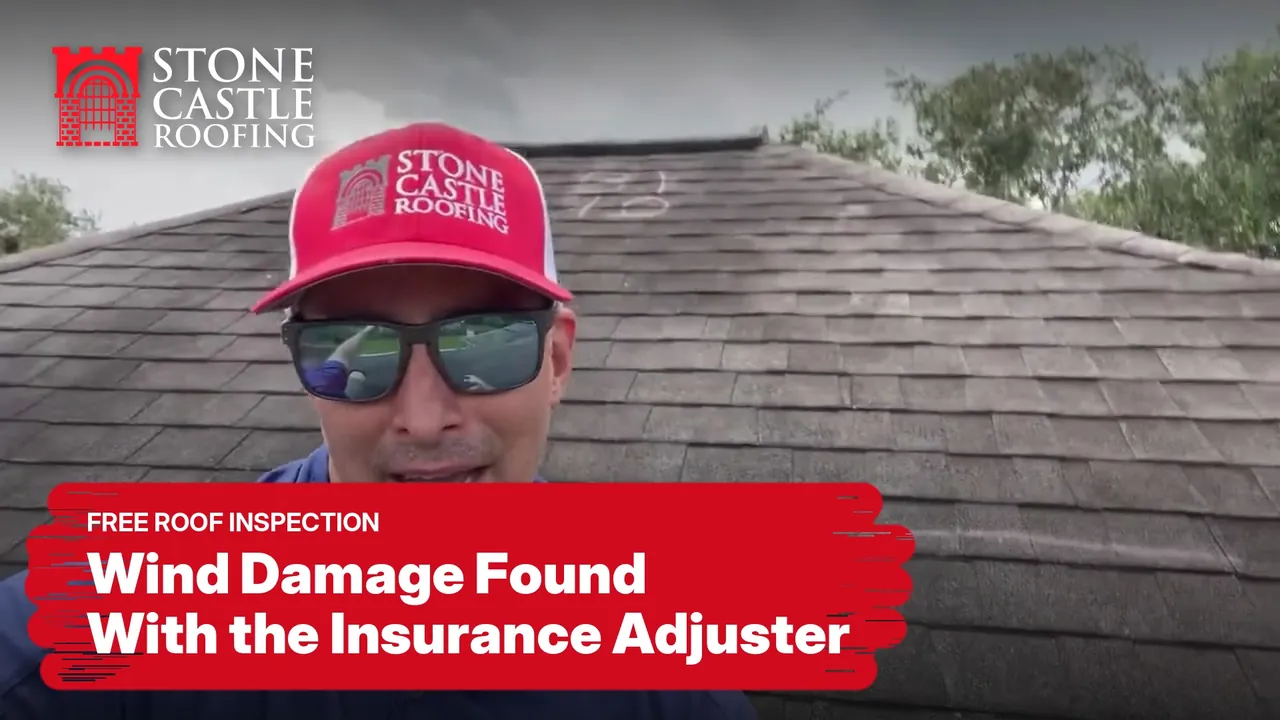
Wind Damage Roof Inspection With the Insurance Adjuster in Pearland
Read the transcript
Hey, guys. We are out here in Pearland, Texas. We just met with an insurance adjuster. We did an inspection on this roof and found wind damage. A lot of people don't know that wind damage is not just when the shingles fly off. It's also situations like this. See this black line running across this area? That's a crease from wind damage. The wind pushes the shingle loose, and over time it damages the shingle. So if you have not had an inspection in the past five years, or after a hard storm, give me a call. I'll come out and do a free inspection. If it's something we can make an insurance claim on and get you a brand new roof minus the deductible, we will take care of you. Stone Castle Roofing, (281) 250-1265.
In this article
Why storm chasers show up after Houston storms
After a spring hail storm or a hurricane brushes the Gulf Coast, Pearland and Houston neighborhoods fill up with roofing signs, door hangers, and trucks you have never seen before. Some of those crews are legitimate. Many are "storm chasers," companies that follow severe weather from state to state, sell as many roofs as they can, and leave.
The problem is not that they are from somewhere else. It is what happens after they leave: a leak, a warranty question, or a supplement dispute with your insurer, and nobody answers the phone.
Below are the red flags we see most, what Texas law says about some of them, and a 10-minute check you can run before you sign anything.
9 red flags of storm chaser roofers
1. Out-of-state plates and no local address
A truck with out-of-state plates is not proof of a scam, but it is a reason to ask questions. Ask for a physical business address in the Houston area, not a P.O. box or a hotel room. Then look it up. If the "local office" turns out to be a rented mailbox or an empty storefront, that tells you where they will be when you need a warranty repair.
2. Uninvited door knocking right after the storm
Someone knocks, says they "were working down the street" and noticed damage on your roof. Sometimes that is true. Sometimes they have not been on your roof at all. Never let anyone climb up without your permission, and be wary of damage "found" by a stranger.
3. Pressure to sign today
"This price is only good today" or "the adjuster is coming tomorrow, so sign now" are pressure tactics. A real roofer will still be here next week. Take the paperwork, read it, and compare.
4. Offering to cover, waive, or rebate your deductible
This is the big one. Texas law requires the insured to pay the deductible on a property insurance claim. Under a 2019 law (HB 2102), it is an offense for a seller of goods or services to pay, waive, absorb, rebate, or credit your deductible without your insurer's consent, or to advertise or promise to do so. It is a Class B misdemeanor.
Watch for disguised versions: a "loyalty discount," a "sign placement fee," or a referral credit that happens to equal your deductible. Your insurer may also hold back recoverable depreciation until you show reasonable proof that you paid the deductible.
5. Asking for full payment up front
A deposit for materials can be normal. Full payment before any work starts is not. Do not sign over your insurance check before the job is done.
6. Contingency agreements that hand over control of your claim
Some contracts say the deal depends on insurance approval and quietly give the contractor authority to deal with your insurer for you. Texas law says a roofing contractor may not act as a public adjuster or advertise to adjust claims for property they are roofing. A contractor can document damage and meet your adjuster. You should stay in control of your own claim.
7. Cash only, or no written contract
No contract means no defined scope, materials, or cleanup. For jobs paid with insurance proceeds, Texas law also requires certain contracts to include a specific deductible notice. If there is no paperwork at all, walk away.
8. Vague or missing insurance
Ask for a certificate of liability insurance and make sure it is current. If someone gets hurt on your roof, you want that to be their insurer's problem, not yours.
9. A brand-new company name
Storm chasers sometimes set up a new local-sounding name each season. Check how long the business has been operating in your area, and whether its online presence goes back further than the last storm.
Watch
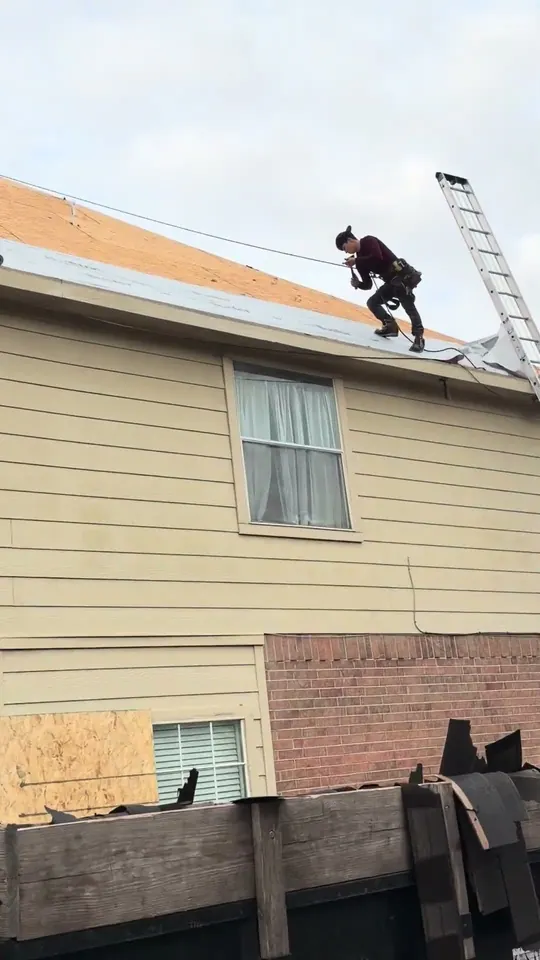
Storm damage is not always visible from the ground. Stone Castle shows what an inspection finds.
 Short
Storm Damage? Get Your Roof Inspected
How to check a roofer in 10 minutes
You do not need a background check service. Run through these:
| Check | What you are looking for |
|---|---|
| Physical address | A real Houston-area location you can drive by |
| Local phone number | Answered by a person during business hours |
| Insurance certificate | Current general liability coverage |
| Reviews and projects | Local jobs, real photos, responses to complaints |
| Written contract | Scope, materials, cleanup, payment schedule, deductible notice |
| Manufacturer credentials | Can be confirmed on the manufacturer's own contractor directory |
| Permits | Willing to pull permits where your city requires them |
For more detail, see our guide on how to find a trustworthy roofer in Houston.
Read the contract before you sign
Storm chaser contracts are often short, vague, and signed on the hood of a truck. Before you sign any roofing contract after a storm, read it for these points:
- Scope of work. Does it say full replacement or repair, and which parts of the roof are included (decking, underlayment, flashing, vents, gutters)?
- Materials. Is the shingle or metal product named by brand and line, or does it just say "shingles"?
- Payment schedule. How much is due when, and is the final payment tied to completion?
- Deductible notice. For contracts paid with insurance proceeds, Texas law requires specific notice language about the deductible. Its absence is a warning sign.
- Claim language. Watch for wording that assigns your insurance benefits to the contractor or authorizes them to negotiate with your insurer for you.
- Cancellation terms. Know how and when you can cancel, and what it costs.
- Cleanup and disposal. Nails in the driveway and a dumpster left for weeks are not "extras."
If anything is unclear, ask for it in writing. A legitimate roofer will explain each line without getting defensive. If the contract asks you to sign a blank or partially filled form, do not sign it.
It also helps to get at least two written estimates. Comparing scopes side by side is often the fastest way to see which bid is missing something, or which one is padding the job.
What a legitimate local contractor does differently
A local roofer has to face the same neighbors for years. That changes how the job gets done:
- Inspects before selling. A real roof inspection comes with photos and an honest read, including "you do not need a new roof."
- Works with your adjuster, not around them. We meet adjusters on site, point out damage, and document it. You file and manage your own claim.
- Collects your deductible. Every legitimate contractor in Texas does. It is the law.
- Gives you time. No same-day deadlines. You can compare bids and ask questions.
- Stays after the job. If something comes up months later, you call a local number and someone shows up.
Stone Castle Roofing is based in Pearland at 7626 Longleaf Dr, and our team brings 20+ years of combined roofing industry experience. You can see our work on the projects page and read what neighbors say on our reviews page.
What to do right after a storm
Before anyone knocks on your door, have a plan:
- Stay safe. Do not climb on a wet or damaged roof.
- Take photos of the roof from the ground, ceilings, attic, and any dented gutters or siding.
- Prevent more damage. A temporary tarp or emergency repair is reasonable. Keep receipts.
- Call your insurance company or agent to understand your coverage and how to start a claim.
- Get a local inspection before signing anything.
Our storm damage restoration team handles emergency repairs and claim documentation, and our guide to hail damage roof insurance claims in Texas walks through the claim process step by step.
Talk to a Pearland roofer
If a stranger is pushing you to sign after the last storm, get a second opinion first. Stone Castle Roofing offers free roof inspections across Pearland and Greater Houston. We will show you what we find, and if the roof does not need replacing, we will say so.
Schedule a free inspection, contact us online, or call (281) 250-1265 and ask for an inspection.
Frequently Asked Questions
Yes. Under Texas Business and Commerce Code Section 27.02, added by HB 2102 in 2019, a seller commits a Class B misdemeanor by paying, waiving, absorbing, rebating, or crediting an insured's deductible without the insurer's consent. Advertising or promising to do so is also covered. Legitimate Texas roofers collect the deductible.
Look for a pattern: uninvited door knocking right after a storm, out-of-state plates with no local address, pressure to sign the same day, requests for full payment up front, and offers to cover your deductible. Ask for a physical Houston-area address, a current insurance certificate, and local references before signing anything.
A roofer can inspect, document damage, and meet your adjuster on site, but Texas law says a roofing contractor may not act as a public adjuster or advertise to adjust claims for property they are roofing. You should file and manage your own claim, and be cautious of contracts that hand claim control to the contractor.
You should not pay in full before work starts. A reasonable deposit for materials can be normal, but the balance should be tied to progress or completion and spelled out in a written contract. Never sign over your full insurance check to a contractor before the job is done and you have inspected it.
Take their card but do not sign anything or let them on your roof that day. Photograph any damage you can see from the ground, call your insurance company, and schedule an inspection with a local roofer who has a verifiable address. Compare at least two written estimates before you decide.
Related articles
How to Find a Trustworthy Roofer in Houston: 8 Steps
Texas has no statewide roofing license, so vetting is on you. Here is a step-by-step process Pearland and Houston homeowners can use to find a roofer.
7 min read
Hail Damage Roof Insurance Claim in Texas: A Step by Step Guide
What to do after hail hits your Pearland or Houston home: safety, photos, temporary protection, inspection, policy terms, the adjuster visit, and storm chasers.
8 min read
15 Questions to Ask a Roofer Before Hiring (and What Good Answers Sound Like)
The right questions show you fast whether a roofer is a good fit. Here are 15 to ask before you hire, plus what a solid, honest answer should sound like.
7 min read
About Stone Castle Roofing
Stone Castle Roofing is a locally owned roofing contractor in Pearland, TX, serving homeowners and businesses across Greater Houston. We are a GAF Certified Plus contractor and every project starts with a free roof inspection.