
How to Choose a Metal Roofing Contractor in Houston
Metal roofs are only as good as the crew installing them. Here is how Houston homeowners can vet a metal roofing contractor before they sign anything.
How do I choose a metal roofing contractor in Houston?
Choose a contractor who installs metal regularly, not just shingles. Ask which system they recommend (standing seam or exposed fastener) and why, what panel gauge and clips they use, which underlayment is rated for metal, and how they handle trim and flashing. Get proof of insurance, a written scope, and both the manufacturer and workmanship warranty terms in writing.
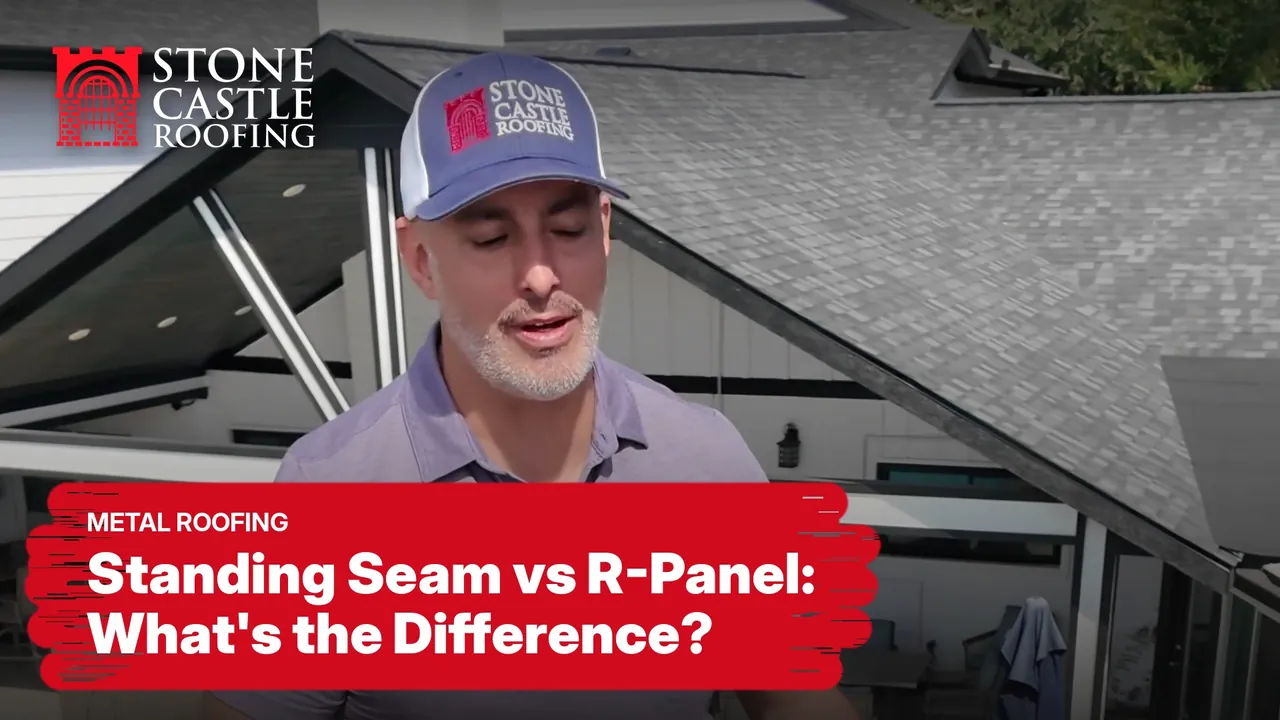
Standing Seam vs R-Panel Metal Roof: What's the Difference?
Read the transcript
People always ask me what the difference is between a standing seam roof and an R-panel roof. I'm going to show you. This is a standing seam metal roof. If you look closely, you don't see any exposed screws. Underneath each panel there are metal clips screwed into the plywood. The metal goes on top, and then we run a machine that locks the panels together. It's a very secure, watertight system with no exposed screws where water can get in. It also has a clean, high-end look, so it's used mostly for luxury residential roofs. This is an R-panel roof. It looks similar to standing seam, but you'll see exposed screws throughout the roof. It's still a great roof system. R-panel is usually a little thinner, 26 gauge, while standing seam is 24 gauge. Standing seam also looks better, but R-panel doesn't look bad either. It's not something you'd usually use on a home unless it's a lake house, a shed or a carport, and there's more chance of a leak. I'm not saying it will leak, but anywhere you have screws, if one loosens a little, water can get in. Installed correctly, you shouldn't have that problem. If you need a free consultation or estimate on an R-panel or standing seam roof, give me a call. Stone Castle Roofing, (281) 250-1265.
In this article
Why the installer matters more than the panel
A metal roof can be one of the longest-lasting roofs you put on a house in the Houston area. It handles UV, heavy rain and high wind well, and many panels carry strong paint coating warranties. None of that matters if the panels are installed wrong.
Most metal roof problems we see around Pearland trace back to installation, not the metal itself: fasteners driven at the wrong angle, panels with no room to expand, flashing that was bent on site with no plan for water. A shingle crew that "also does metal" may not know these details. That is why the first question is not which panel to buy. It is who is putting it on.
If you are still deciding between materials, start with our breakdown of metal roof vs. shingles in Houston. If you have settled on metal, the next job is picking the crew.
Standing seam vs. exposed fastener: does the contractor know both?
There are 2 main types of residential metal roofing, and they are installed very differently.
| Feature | Standing seam | Exposed fastener |
|---|---|---|
| How it attaches | Concealed clips or fasteners under raised seams | Screws through the face of the panel |
| Fastener maintenance | Little to none on the panel face | Screws and washers typically need checking and replacing over time |
| Thermal movement | Clips can let panels expand and contract | Panels are pinned in place at each screw |
| Typical use | Homes, higher-end residential, low-slope metal | Barns, shops, budget residential, patio covers |
| Install skill required | Higher: seaming, layout, trim detailing | Moderate, but screw placement is critical |
Any contractor worth hiring can explain both and tell you why one fits your roof better. Roof pitch, budget, how long you plan to stay in the house and whether you are in a windstorm area all play a part. If a company only sells one type and waves off the other, ask why.
Ask to see finished jobs of the exact system they are quoting, and look for close-up photos of seams, ridges and valleys rather than wide shots from the street. Our project gallery shows the kind of detail you want.
Panel gauge, clips and fasteners
Metal panels are sold by gauge. A lower number means thicker steel. Residential panels are commonly 24 or 26 gauge, and thicker panels tend to resist dents and flexing better. Your contractor should write the gauge on the estimate, along with the panel profile and the manufacturer.
The attachment details matter just as much:
- Clips (standing seam). Ask whether they use fixed clips, floating clips or both, and where. Floating clips let the panel move with heat, which counts for a lot on long runs under a Texas summer sun.
- Fasteners (exposed fastener). Screws should be the type the panel maker specifies, with sealing washers, driven straight and snug. Overdriven screws crush the washer. Underdriven screws leave a gap. Both can leak.
- Spacing. Fastener and clip spacing often needs to be tighter for wind ratings. In the TWIA catastrophe area (all of Brazoria and Galveston counties, plus the part of Harris County east of State Highway 146), the roof generally has to meet the windstorm building code.
If your home is in that area, ask the contractor how they handle the windstorm inspection. At Stone Castle we install to the windstorm code and coordinate the required inspection when a project needs one. Our guide to WPI-8 windstorm certification in Pearland explains the process.
Underlayment, trim and flashing details
Metal sits directly on top of the underlayment, and the underlayment is your backup layer if water ever gets under a panel. Metal roofs can also run very hot. Ask for an underlayment that the panel manufacturer approves for metal, often a high-temperature synthetic or a high-temp self-adhered membrane in valleys and at low-slope sections. Standard felt can break down under hot metal over time.
Then ask about trim and flashing. Skilled metal installers show it in these details:
- Ridge and hip caps with closures that keep out wind-driven rain and pests
- Valleys built so water flows across the metal, not into it
- Wall and chimney flashing that is layered correctly, not caulked in place
- Pipe boots rated for metal and sized for the panel profile
- Eave and rake trim that locks panels in and resists wind uplift
A contractor who can walk you through these details on a drawing, or standing in your yard pointing at your roof, has done this many times.
Oil canning: what it is and how contractors reduce it
Oil canning is visible waviness in the flat part of a metal panel. It is mostly cosmetic and usually does not affect performance, but it surprises plenty of homeowners after install.
It can come from the steel coil itself, uneven roof decking, panels fastened too tight to move, or handling damage. A contractor who installs metal regularly brings up oil canning before the job, not after you notice it. They can reduce it by checking the deck for flatness, using panels with striations or stiffening ribs, choosing a heavier gauge, and installing clips so panels can move. Be wary of anyone who promises it will never happen. No honest installer can guarantee that.
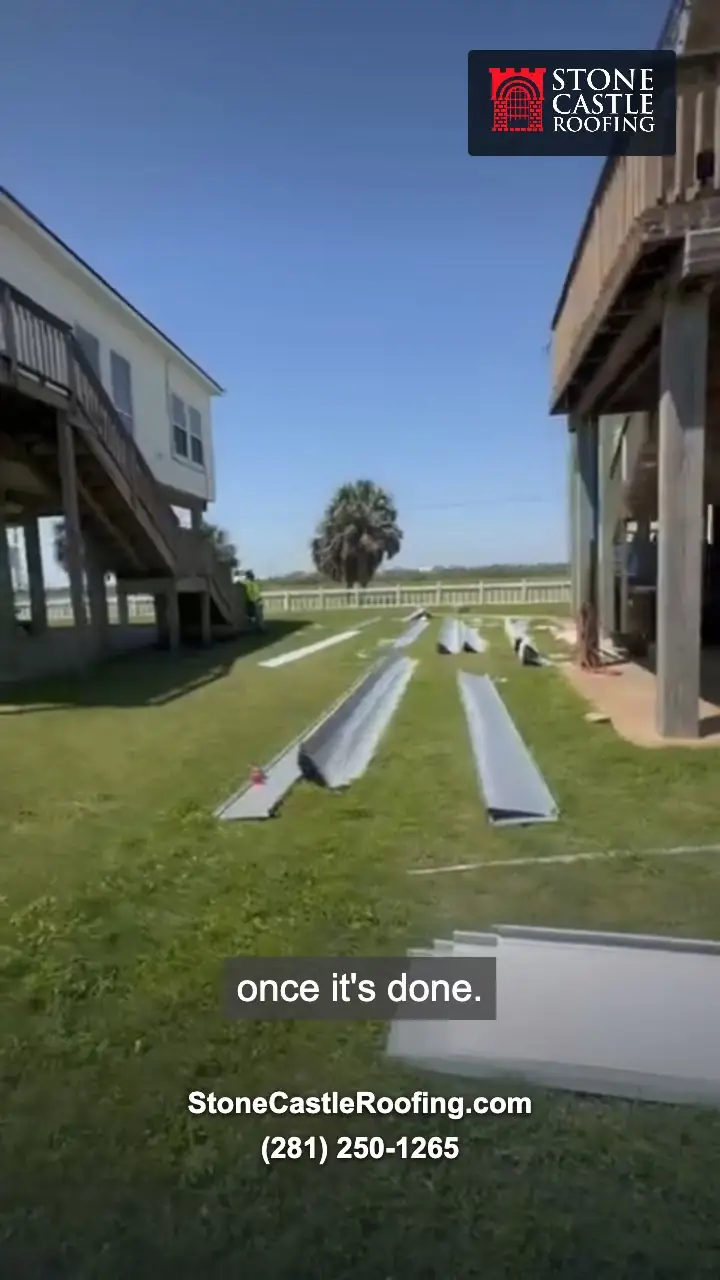
Standing Seam Metal Roof Installation on a Galveston Beach House
Read the transcript
What's going on guys? It's out here in Galveston, Texas. We're putting a brand new standing seam roof on this beach house. We already have all of our panels cut. As you can see, it's going to be standing seam. And it's going to look really nice once it's done. Hey guys, we do metal too. We do R-panel standing seam. stone coated metal, tile, slate. Guys for all your roofing needs give us a call. Stone Castle Roofing 281-250-1265.
Warranties: manufacturer, coating and workmanship
There are usually 3 separate warranties on a metal roof, and you should get the terms of each in writing:
- Panel or material warranty from the manufacturer, covering defects in the metal.
- Paint or coating warranty, often covering chalking and fading within set limits. Coatings vary, so ask which finish is on your panel and what the warranty covers.
- Workmanship warranty from the contractor, covering how it was installed.
Read the fine print. Some manufacturer warranties require specific underlayment, fasteners or installer training to stay valid. Ask the contractor to confirm in writing that their install method meets the manufacturer's requirements. Also ask what happens if the contractor goes out of business, since a workmanship warranty is only as good as the company behind it.
Questions to ask and red flags to watch for
Bring this list to every estimate:
- How many metal roofs did your crew install in the last year, and can I see a few?
- Do you use your own crews or subcontractors for metal?
- Which system, panel profile and gauge are you quoting, and why?
- What underlayment, clips and fasteners will you use?
- How will you flash my walls, chimney, valleys and pipes?
- Does my address need a windstorm inspection, and who coordinates it?
- Can I see your certificate of insurance?
- What warranties come with this, and are they in writing?
For a longer list, see our questions to ask a roofer before hiring.
Red flags to walk away from:
- No local address or a company that showed up after a storm
- A quote with no panel gauge, profile or manufacturer listed
- Pressure to sign the same day
- Asking for full payment before materials arrive
- No proof of insurance
- Vague answers about flashing, or "we just caulk it"
Texas does not have a statewide roofing license, so you cannot rely on a state license check. That makes insurance proof, local references and a detailed written contract even more important. We cover the full vetting process in how to find a trustworthy roofer in Houston.
Talk to a Pearland roofer
Stone Castle Roofing installs residential and commercial metal roofing across Pearland and Greater Houston, and our team brings 20+ years of combined roofing industry experience. We will tell you whether standing seam or exposed fastener fits your home, and if shingles make more sense, we will say so. You can also see how a full roof replacement works with us from start to finish.
Start with a free roof inspection so we can measure, check your decking and give you a written scope. Contact us to book it, or call (281) 250-1265. We serve Pearland, Houston and the surrounding service areas.
Frequently Asked Questions
Standing seam is usually the better fit for homes because its fasteners are hidden and the panels can expand and contract on clips. Exposed fastener roofing costs less up front and works well on shops, barns and patio covers, but its screws and washers typically need periodic checks. Roof pitch, budget and windstorm requirements also affect the choice.
Residential metal roofs in the Pearland area are commonly 24 or 26 gauge. A lower gauge number means thicker steel, which tends to resist denting and flexing better. The right choice depends on the panel profile, your budget and any wind rating requirements, so ask your contractor to list the gauge on the written estimate.
Oil canning is visible waviness in the flat areas of metal panels. It is mostly cosmetic and usually does not affect how the roof performs. Contractors can reduce it with flat decking, panels that have stiffening ribs, heavier gauges and clips that let panels move, but no installer can honestly promise it will never appear.
No. Texas does not have a statewide roofing license, so a metal roofing contractor is not required to hold a state license. Some roofers join voluntary programs through the Roofing Contractors Association of Texas. Because there is no state check, homeowners should verify insurance, local permits, manufacturer credentials, references and a written contract before hiring.
A metal roof usually has 3 separate warranties: a manufacturer warranty on the panel material, a coating warranty covering paint chalking and fading within set limits, and a workmanship warranty from the contractor. Get each one in writing, and confirm the installation method meets the manufacturer's requirements so the material warranty stays valid.
Related articles
Metal Roof vs Shingles: An Honest Comparison for Houston Homes
Metal or shingles for your Pearland or Houston home? An honest look at lifespan, hail, wind, heat, noise, HOA rules, insurance and the long-term cost of each.
8 min read
15 Questions to Ask a Roofer Before Hiring (and What Good Answers Sound Like)
The right questions show you fast whether a roofer is a good fit. Here are 15 to ask before you hire, plus what a solid, honest answer should sound like.
7 min read
WPI-8 Windstorm Certification for Your Roof: A Pearland Homeowner's Guide
Replacing a roof in Brazoria, Galveston, or coastal Harris County? Here is what WPI-8 windstorm certification means, when you need it, and how to get it.
8 min read
About Stone Castle Roofing
Stone Castle Roofing is a locally owned roofing contractor in Pearland, TX, serving homeowners and businesses across Greater Houston. We are a GAF Certified Plus contractor and every project starts with a free roof inspection.