
How to Find a Trustworthy Roofer in Houston: 8 Steps
Texas has no statewide roofing license, so vetting is on you. Here is a step-by-step process Pearland and Houston homeowners can use to find a roofer.
How do I find a trustworthy roofer in Houston?
Look for a roofer with a verifiable local address, a steady pattern of recent reviews, and a current certificate of insurance. Since Texas has no statewide roofing license, also check manufacturer certifications, permit history and references. Get a detailed written estimate, never pay the full amount upfront, and avoid anyone pressuring you to sign after a storm.
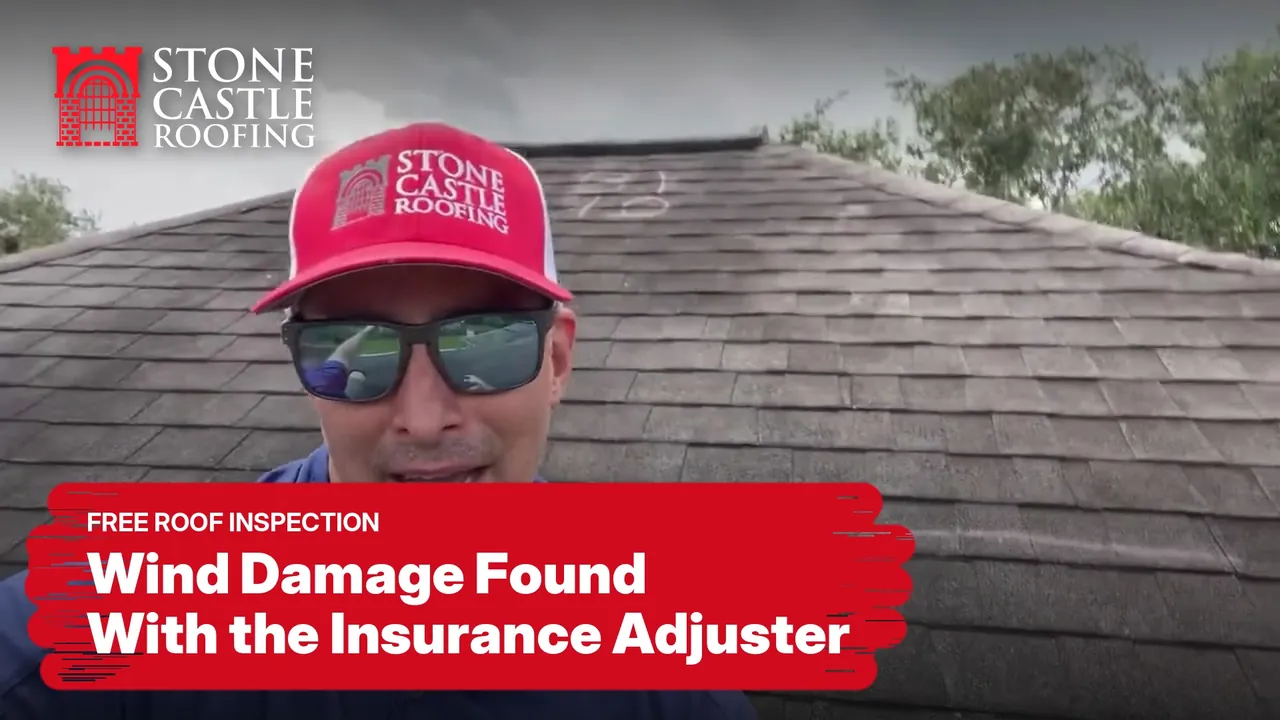
Wind Damage Roof Inspection With the Insurance Adjuster in Pearland
Read the transcript
Hey, guys. We are out here in Pearland, Texas. We just met with an insurance adjuster. We did an inspection on this roof and found wind damage. A lot of people don't know that wind damage is not just when the shingles fly off. It's also situations like this. See this black line running across this area? That's a crease from wind damage. The wind pushes the shingle loose, and over time it damages the shingle. So if you have not had an inspection in the past five years, or after a hard storm, give me a call. I'll come out and do a free inspection. If it's something we can make an insurance claim on and get you a brand new roof minus the deductible, we will take care of you. Stone Castle Roofing, (281) 250-1265.
In this article
Why vetting a roofer in Houston takes extra work
Your roof protects everything under it, and in the Houston area it takes a beating: high UV, heavy downpours, spring hail and hurricane season from June 1 to November 30. When it needs work, you want someone who will do it right and still answer the phone next year.
The hard part is that Texas does not have a statewide roofing license. Anyone can print business cards and call themselves a roofer. After a big storm, out-of-town crews flood neighborhoods in Pearland, Friendswood and League City. That means the vetting is on you. The steps below are the same ones we would tell a neighbor to follow, whether they hire us or someone else.
Check who you are dealing with
The first 3 steps take about 15 minutes and filter out most of the problems before anyone climbs a ladder.
Step 1: Confirm a real local address and phone
A trustworthy roofer has a physical business address you can look up, a local phone number that someone answers, and a work history in the area.
- Search the address on a map. Is it an office or a shop, or an empty lot or a mail drop?
- Call the number during business hours. Do you reach a person or a full voicemail box?
- Ask how long they have worked in your area and which neighborhoods.
A local company has a reputation to protect and will be around to honor warranty work. Stone Castle Roofing is based at 7626 Longleaf Dr in Pearland, and you can see the areas we cover on our service areas page.
Step 2: Read the pattern in the reviews, not just the score
Star ratings are easy to game. The pattern in reviews tells you more.
- Steady over time. Reviews spread over months and years look more natural than a burst in one week.
- Specific details. Real reviews mention the job type, the crew, cleanup or how the company handled a problem.
- How the company responds. Look at the negative reviews. A calm, specific reply that offers to fix the problem is a good sign.
- More than one platform. Check Google, the Better Business Bureau and any other sites where the company is listed.
You can read what our customers say on our reviews page, then compare it with what you find on Google.
Step 3: Get proof of insurance, in writing
This step protects you more than any other. Ask for a certificate of insurance that shows general liability coverage, and ask whether the company carries workers' compensation or another form of coverage for its crews. Texas does not require every private employer to carry workers' comp, so ask directly how injured workers are covered.
Better yet, ask the contractor to have their insurance agent send the certificate straight to you. Check the policy dates and call the agent to confirm it is active. If a roofer is uninsured and someone gets hurt on your property, the problem can land on you.
Verify credentials you can actually check
Without a state license to look up, you have to piece together credentials from other sources.
Step 4: Understand the licensing reality in Texas
A few things can stand in for the license Texas does not issue:
- Voluntary credentials. The Roofing Contractors Association of Texas (RCAT) offers a voluntary licensing program for roofers who choose to meet its requirements. It is not mandatory, so its absence is not a dealbreaker, but it can be one useful signal.
- City registration and permits. Some cities require contractors to register or pull a permit for roof replacement. Ask your contractor whether your city requires a permit, and who will pull it. Rules vary by city, so confirm with your local building department.
- Windstorm requirements. If you live in the TWIA catastrophe area (all of Brazoria and Galveston counties, plus the part of Harris County east of State Highway 146), roof work generally must meet the windstorm code and be inspected to keep TWIA eligibility. Ask how the roofer handles that. Our WPI-8 windstorm certification guide explains it.
Step 5: Check manufacturer certifications
Major shingle and metal manufacturers run contractor programs with requirements such as insurance, training and business history. Some certified contractors can offer extended manufacturer warranties that other installers cannot.
Do not take a logo on a truck at face value. Look the company up on the manufacturer's own contractor directory. Stone Castle Roofing is listed as a GAF Certified Plus contractor in the manufacturer's directory, which is one reason homeowners choose us for shingle roofing and full roof replacement.
Get it in writing and protect your money
Most roofing disputes come down to what was promised versus what was written. These 2 steps close that gap.
Step 6: Get a detailed written estimate and contract
A trustworthy roofer puts everything in writing before work starts. A good estimate lists:
- Scope of work: tear-off, decking repair, underlayment, flashing, vents, drip edge
- Materials by brand, product line and color
- How damaged decking will be handled and priced
- Permit and inspection responsibilities
- Payment schedule tied to milestones
- Cleanup and nail sweep
- Warranty terms for both materials and workmanship
Compare estimates line by line instead of by the total at the bottom. A low number often means something is missing, such as decking, new flashing or ventilation. Ask each roofer to explain what is not included, and get any verbal promise added to the contract before you sign. Our roof replacement cost guide explains what drives the price so you can compare fairly.
Step 7: Protect your money and your insurance claim
Two rules cover most of the scams we hear about:
- Never pay the full amount upfront. A reasonable deposit or a materials payment is common. Paying for the whole job before work starts is not.
- Be very careful with an assignment of benefits. Some contractors ask homeowners to sign a form that hands over their insurance claim rights. Read anything you sign after a storm, and talk to your insurance company first if a contract mentions assigning benefits or letting the roofer handle your claim.
Texas law also prohibits a contractor from acting as your public adjuster on a claim where they are doing the repair, and from paying or waiving your deductible. A roofer can meet with your adjuster and document damage, which is what we do on storm damage restoration jobs. They should never promise your claim will be approved. If you are dealing with hail, read our guide to hail damage insurance claims in Texas.
Watch for storm chaser tactics
Step 8: Watch for storm chaser tactics
After hail or a tropical storm, expect door knockers. Not all of them are bad, but these signs should slow you down:
- Out-of-state plates or a phone number from another area code
- "We're working on your neighbor's roof and have leftover material"
- Same-day discounts or pressure to sign right now
- Offers to "cover your deductible"
- Climbing on your roof without permission
You do not have to decide on the spot. Get the company name, look them up and use the steps above. A real local roofer will still be here tomorrow. Our post on storm chaser roofer red flags covers more warning signs.
Talk to a Pearland roofer
Stone Castle Roofing is a locally owned roofing company in Pearland serving homeowners and businesses across Houston and the surrounding area. Our team brings 20+ years of combined roofing industry experience, and we put every scope in writing before we start.
If you want a second set of eyes on a bid you already have, or a first look at your roof, book a free roof inspection. We will check your roof, take photos, explain what we find and give you a written estimate with no pressure to sign. Contact us to set it up, or call (281) 250-1265.
Frequently Asked Questions
No. Texas does not have a statewide license for roofing contractors. The Roofing Contractors Association of Texas offers a voluntary licensing program, and some cities require contractor registration or permits for roof replacement. Because there is no state license to check, homeowners should verify insurance, local address, reviews, manufacturer certifications and a written contract.
Storm chasers often arrive right after hail or a hurricane, knock doors, use out-of-area phone numbers or plates, and push you to sign the same day. Many offer to cover your deductible, which Texas law prohibits. A local roofer will have a verifiable address, a steady review history and no problem giving you time to decide.
You should not pay the full amount before work begins. A reasonable deposit or a payment when materials are delivered is common, but the payment schedule should be tied to milestones and written into the contract. Paying in full upfront leaves you with little leverage if the job is delayed, unfinished or done poorly.
A roofing contractor should carry general liability insurance and should explain how its workers are covered if someone is injured, such as workers' compensation. Ask for a certificate of insurance sent directly from the contractor's insurance agent, check the policy dates and call the agent to confirm the coverage is active before work starts.
Be very cautious. An assignment of benefits can hand your insurance claim rights to the contractor, which limits your control over the claim and the payment. Read every document you are asked to sign after a storm, and talk with your insurance company or an attorney before signing anything that assigns benefits or lets the roofer manage your claim.
Related articles
Storm Chaser Roofers: 9 Red Flags Houston Homeowners Should Know
After a Houston hail storm or hurricane, out-of-town crews show up fast. Learn the red flags of storm chaser roofers and how to vet a roofer in 10 minutes.
7 min read
15 Questions to Ask a Roofer Before Hiring (and What Good Answers Sound Like)
The right questions show you fast whether a roofer is a good fit. Here are 15 to ask before you hire, plus what a solid, honest answer should sound like.
7 min read
Hail Damage Roof Insurance Claim in Texas: A Step by Step Guide
What to do after hail hits your Pearland or Houston home: safety, photos, temporary protection, inspection, policy terms, the adjuster visit, and storm chasers.
8 min read
About Stone Castle Roofing
Stone Castle Roofing is a locally owned roofing contractor in Pearland, TX, serving homeowners and businesses across Greater Houston. We are a GAF Certified Plus contractor and every project starts with a free roof inspection.