
Residential Roofer vs Commercial Roofer: What's the Difference?
Steep-slope vs low-slope, crews, permits and insurance: how residential and commercial roofers differ, and why HOAs and landlords gain from a roofer for both.
What is the difference between a residential roofer and a commercial roofer?
A residential roofer mainly installs and repairs steep-slope roofs on homes, using shingles, metal, slate or tile. A commercial roofer mainly works on low-slope roofs with membranes like TPO, modified bitumen and coatings, which need different crews, equipment, safety planning and permits. Many property owners benefit from a contractor that does both.
If you own a home in Pearland, you probably think of a roofer as the crew that tears off old shingles and nails down new ones. If you own a strip center in Friendswood or manage a small office building in Houston, your roof looks nothing like that. It is flat (or close to it), covered in a membrane, and full of drains, curbs and rooftop units.
Both jobs are called "roofing," but they are different trades with different materials, crews, equipment and paperwork. Knowing which one you need helps you hire the right contractor and ask better questions before you sign.
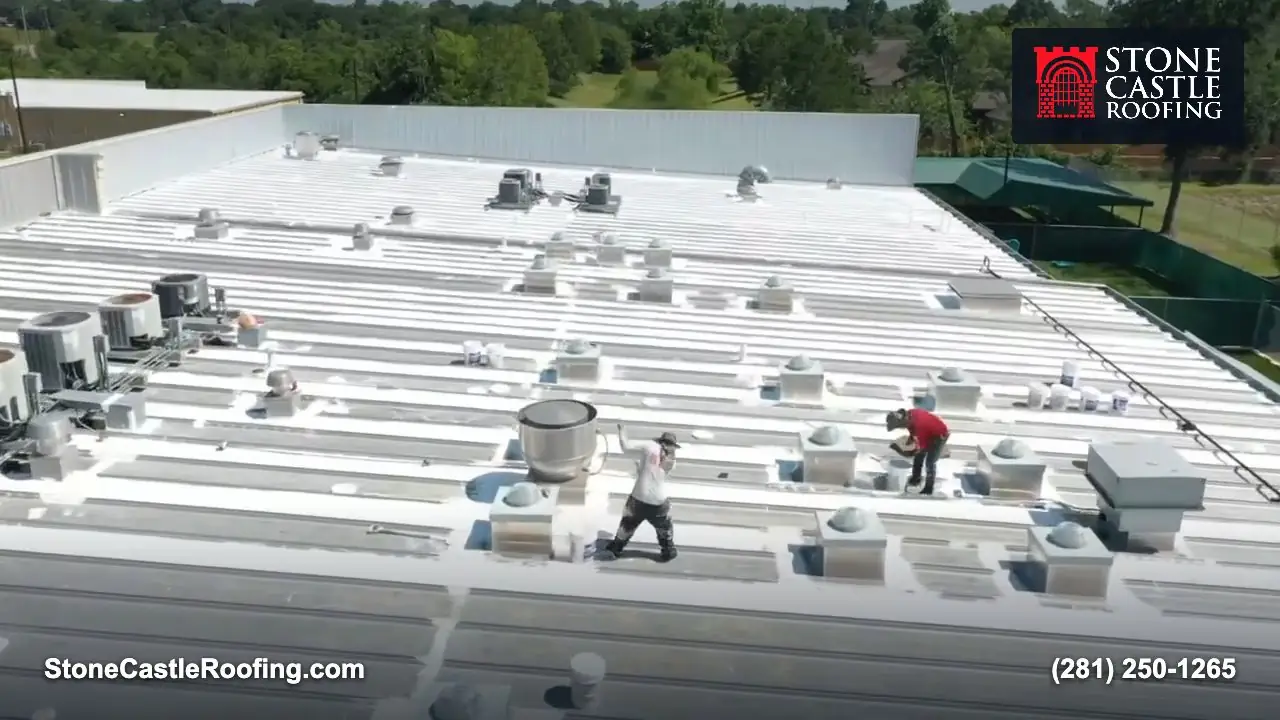
Commercial Metal Roof: Aerial Project Views
Read the transcript
[Instrumental music]
In this article
Steep-Slope vs Low-Slope: The Core Difference
The biggest split between residential and commercial roofing is the pitch of the roof.
- Steep-slope roofs (most homes) shed water fast. Gravity does most of the work, so the roof can be built from overlapping pieces like shingles, metal panels, slate or tile.
- Low-slope roofs (most commercial buildings) barely tilt. Water moves slowly toward drains, scuppers or gutters, so the roof has to be a continuous waterproof layer with sealed seams.
That one fact drives almost everything else. A shingle roof is about layering and ventilation. A low-slope roof is about watertight seams, drainage design and keeping water from sitting in one spot for days after a Gulf Coast downpour.
There is overlap. Some homes have flat sections over porches or additions, and some commercial buildings (restaurants, churches, small offices) have steep-slope shingle or metal roofs. That is one reason a contractor who handles both is useful.
Materials Each Trade Works With
Residential roofers in the Houston area mostly install:
- Architectural shingles, including impact-resistant options
- Metal roofing, both standing seam and exposed fastener panels
- Slate and tile on higher-end homes
- Flashing, ridge vents, drip edge and seamless gutters
Commercial roofers typically work with:
- TPO and other single-ply membranes, heat-welded at the seams
- Modified bitumen, applied in layers with heat, adhesive or self-adhering sheets
- Built-up roofing (multiple layers of felt and asphalt, often topped with gravel)
- Metal roof systems on warehouses and shops
- Roof coatings used to restore an aging membrane or metal roof
Each material has its own install method, tools and manufacturer requirements. A crew that does clean shingle work is not automatically trained to weld TPO seams, and the reverse is true too. If you want a deeper look at the commercial options, read our TPO vs mod bit vs metal comparison.
Crews, Equipment and Safety
A residential tear-off is usually a fast, physical job. Crews work on pitched surfaces, use roof jacks and harnesses, and haul debris to a dumpster in the driveway. Weather permitting, a crew finishes many homes in 1 to 3 days.
Commercial work moves differently:
- Bigger surfaces. A commercial roof can cover many thousands of square feet (dozens or hundreds of roofing squares, at 100 square feet each).
- Heavier equipment. Cranes or lifts may be needed to load materials, plus hot-air welders, seam probes and sometimes kettles or torches.
- Different fall hazards. Low-slope roofs need warning lines, guardrails or other fall protection at the edges and around skylights and hatches.
- Occupied buildings. Tenants, customers and employees are often underneath. Crews have to manage noise, odors, access points and staging so the business can keep running.
Safety planning on a commercial job is usually more formal, and site coordination takes more time than on a typical home. Rooftop HVAC units, gas lines and electrical conduit often have to be disconnected, raised or worked around, which means coordinating with other trades on the same schedule.
Permits, Code and Insurance Limits
Many cities in our area require a permit for a roof replacement, residential or commercial. Commercial projects often involve more review, since the building may have fire-rating requirements, energy code rules for insulation, and drainage that has to work with the building's design.
Your address plays a part too. All of Brazoria and Galveston counties, plus the part of Harris County east of State Highway 146, sit in the Texas Windstorm Insurance Association (TWIA) catastrophe area. In that zone, roof work generally needs to be inspected and certified to the windstorm building code to keep TWIA eligibility, and the Texas Department of Insurance issues a WPI-8 certificate when it passes. Not every repair requires it, so confirm for your address with TDI. Stone Castle installs to the windstorm code and coordinates the required inspection when a project needs one. That applies to homes and commercial buildings alike, so ask any contractor how they handle it before you sign.
Insurance is another difference. Commercial property owners, landlords and HOAs often require a contractor to carry higher liability limits and to list the owner or management company as an additional insured. Always ask for current certificates before work starts, whoever you hire.
Project Management and Communication
On a house, you usually deal with one decision maker: you. On a commercial or multi-unit property, a roofing project can involve:
- Property managers and building owners
- HOA boards that vote on scope and budget
- Tenants who need notice before work starts
- Insurance adjusters on storm claims
- Facilities staff who control roof access and rooftop equipment
A good commercial roofer plans the schedule around the business, phases large roofs so sections are never left open overnight, and documents the work with photos so owners and boards can see what was done. Many commercial clients also want a written maintenance plan to go with the finished roof.
Residential projects need good communication too, just on a smaller scale. A homeowner wants to know when the crew arrives, where the dumpster goes, how the yard will be protected and how nails will be cleaned up so kids and pets stay safe. A solid residential roofer explains each of those up front and walks the property with you at the end.
When You Need Which Type of Roofer
A quick way to sort it out:
| Your property | Roof type you likely have | Who to call |
|---|---|---|
| Single-family home | Shingle, metal, slate or tile | Residential roofer |
| Home with a flat porch or addition | Mostly steep-slope with a low-slope section | Contractor who does both |
| Rental homes or duplexes | Usually steep-slope | Residential roofer with landlord experience |
| HOA, townhomes or condos | Mix of steep-slope and low-slope | Contractor who does both |
| Retail, office or warehouse | Low-slope membrane or metal | Commercial roofer |
| Church, restaurant or small office | Often steep-slope, sometimes mixed | Contractor who does both |
If your building has any low-slope area, ask the contractor directly how many low-slope systems they install and which ones. If you want a full checklist, see our list of questions to ask a roofer before hiring.
Why a Company That Does Both Helps Property Owners
Stone Castle Roofing handles residential roof replacement and commercial roofing across Pearland and Greater Houston. That helps a few kinds of owners in particular:
- HOAs and townhome communities often have shingle roofs on the units and flat roofs on clubhouses, pool buildings or covered walkways. One contractor can inspect and plan all of it.
- Landlords with a mix of rental homes and a small commercial building get one point of contact, one set of records and consistent workmanship.
- Small business owners who also own their home can use one roofer for both.
- Storm events hit everything at once. After a hailstorm, having one contractor document damage on homes and commercial roofs keeps storm damage restoration and insurance conversations organized.
Our team brings 20+ years of combined roofing industry experience, and we are locally owned in Pearland. We handle everything from commercial roof repair on a leaking membrane to full shingle replacements on single-family homes in Pearland and Houston.
Talk to a Pearland Roofer
If you own a property with a bit of both, or you are not sure what is up there, a free inspection settles it. We will walk the roof, tell you what system you have and what shape it is in, and give you a straight answer on repair or replacement.
Schedule a free inspection or contact our Pearland office. You can also call (281) 250-1265. We are open 24/7.
Frequently Asked Questions
Sometimes, but it depends on the roof. If the commercial building has a steep-slope shingle or metal roof, a residential roofer may be a fine fit. Low-slope membrane roofs like TPO or modified bitumen need different training, tools and manufacturer knowledge, so ask the contractor how many of those systems they have installed.
The main difference is roof slope. Most homes have steep-slope roofs that shed water with overlapping shingles, metal, slate or tile. Most commercial buildings have low-slope roofs that need a continuous, sealed membrane and careful drainage. That difference changes the materials, crews, equipment, safety planning and permitting involved.
Many HOAs need both. Townhomes and condos often have shingle roofs on the units, while clubhouses, pool buildings and covered walkways may have flat or low-slope roofs. A contractor that handles residential and commercial work can inspect everything, give one coordinated plan and keep the board's records in one place.
Often, yes. All of Brazoria and Galveston counties, plus part of Harris County east of State Highway 146, are in the TWIA catastrophe area. Roof work there generally must meet the windstorm code and be certified (TDI issues a WPI-8) to keep TWIA eligibility. Not every repair requires it, so confirm with TDI for your address.
A commercial roofing contractor should carry general liability and workers' compensation coverage, and many property owners require higher liability limits for commercial jobs. Ask for current certificates of insurance before work starts, and ask whether the contractor can list your company, HOA or management firm as an additional insured.
Related articles
TPO vs Mod Bit vs Metal: Commercial Roof Systems for Houston Buildings
TPO, modified bitumen, metal, coatings and built-up roofs compared for Houston heat, ponding water and hurricanes, plus when to repair, replace or restore.
8 min read
15 Questions to Ask a Roofer Before Hiring (and What Good Answers Sound Like)
The right questions show you fast whether a roofer is a good fit. Here are 15 to ask before you hire, plus what a solid, honest answer should sound like.
7 min read
How to Find a Trustworthy Roofer in Houston: 8 Steps
Texas has no statewide roofing license, so vetting is on you. Here is a step-by-step process Pearland and Houston homeowners can use to find a roofer.
7 min read
About Stone Castle Roofing
Stone Castle Roofing is a locally owned roofing contractor in Pearland, TX, serving homeowners and businesses across Greater Houston. We are a GAF Certified Plus contractor and every project starts with a free roof inspection.