
TPO vs Mod Bit vs Metal: Commercial Roof Systems for Houston Buildings
TPO, modified bitumen, metal, coatings and built-up roofs compared for Houston heat, ponding water and hurricanes, plus when to repair, replace or restore.
What is the best commercial roofing system for Houston?
There is no single best system. TPO is a popular choice for its reflective, heat-welded seams, modified bitumen suits high-traffic roofs, metal offers the longest service life, and coatings can restore a sound aging roof. The right pick depends on your building's drainage, condition, budget and how long you plan to own it.
Houston is rough on commercial roofs. Summer surface temperatures on a dark roof can climb far above the air temperature, tropical downpours drop inches of rain in an afternoon, and hurricane season runs from June 1 to November 30. On a low-slope roof, every one of those stresses shows up at the seams, drains and flashings.
No one system wins on every building. The right pick depends on your building, your budget, how long you plan to own it, and what is already on the deck. Below we compare the main options we see across Pearland and Greater Houston, plus when to repair, replace or restore.
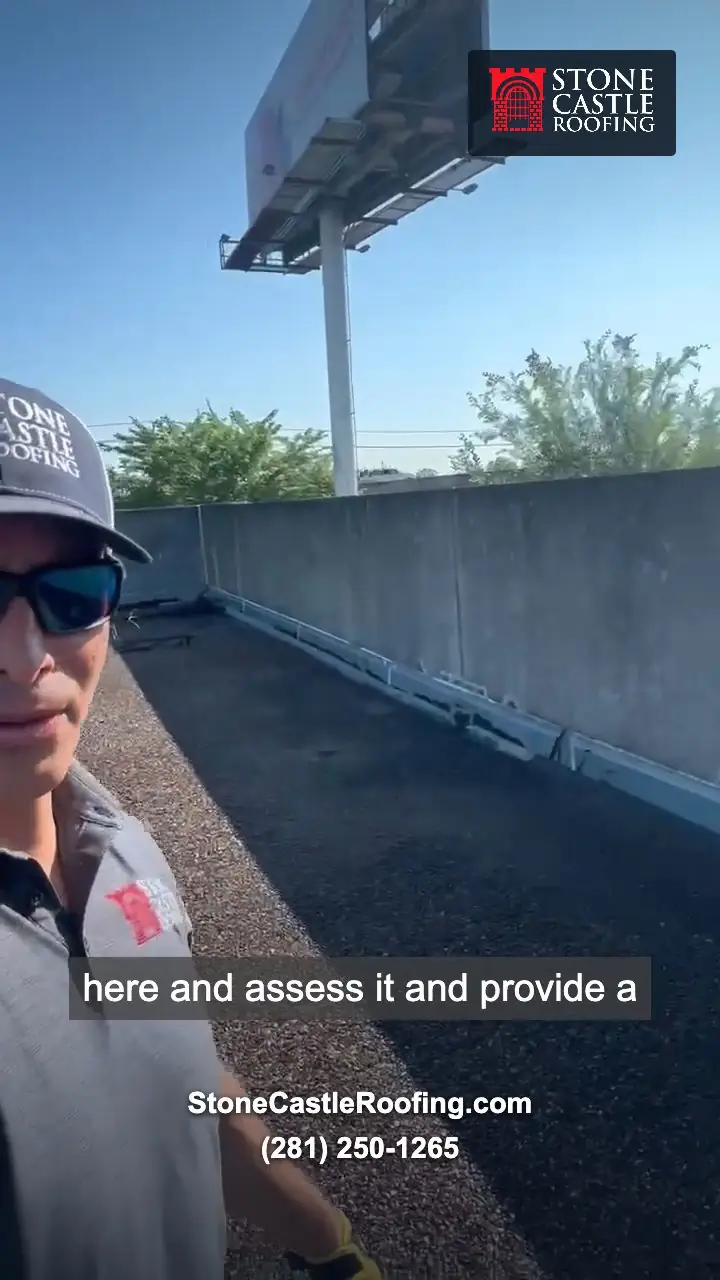
Commercial Roof Leak Assessment
Read the transcript
What's going on guys? We are here in the downtown area assessing this built up commercial roof. It is having a lot of leaks so we've been asked to come out here and assess it and provide a solution. Hey guys that's something that we do all day long is assess roofs and provide solutions guys. No job is too small or too big.
In this article
What Houston Weather Does to a Commercial Roof
Before comparing materials, it helps to know what they are up against:
- Heat and UV. Intense sun breaks down membranes and asphalt over time and drives up cooling costs inside the building.
- Ponding water. Our terrain is flat, and many older buildings have low spots, clogged drains or settled decks. Water that sits on a roof for more than about 48 hours after rain is generally considered ponding, and it speeds up wear.
- Wind uplift. Hurricanes and strong thunderstorms pull at roof edges, corners and seams. Edge metal and attachment matter as much as the membrane itself.
- Hail. Spring storms can bruise or puncture some membranes and dent metal.
- Humidity. Moisture trapped in insulation under a leaking roof can stay hidden for a long time.
Whatever system you choose has to stand up to all five.
The Main Commercial Roofing Systems
TPO (Thermoplastic Polyolefin)
TPO is a single-ply membrane, usually white, with seams that are heat-welded together. It is one of the most common low-slope systems on newer commercial buildings in the Houston area. The reflective surface helps keep roof temperatures down, and welded seams resist leaks when installed correctly. Quality varies by thickness and manufacturer, and the welds at seams and flashings decide how long it stays dry.
Modified Bitumen
Modified bitumen ("mod bit") is an asphalt-based roll roofing installed in 2 or more plies. It can be torch-applied, set in adhesive or self-adhered. It is tough, handles foot traffic well and is easy to patch, which makes it popular on smaller buildings and roofs with lots of equipment. Darker granulated surfaces absorb more heat unless a reflective cap sheet or coating is used.
Metal Roof Systems
Metal works on low-slope and steeper commercial roofs, from warehouses to retail shops. Standing seam systems hide fasteners and allow the panels to expand and contract. Exposed fastener panels cost less upfront but need fastener and sealant maintenance over time. Metal can perform very well in high winds when the system is properly rated and attached.
Roof Coatings (Restoration)
A roof coating is a fluid-applied layer (often silicone or acrylic) put over an existing roof that is still sound. Coatings are not a cure for a failing roof, but on the right building they can seal minor issues, add reflectivity and extend service life without a full tear-off. Silicone coatings are generally better suited to roofs that see some ponding, while acrylics are often used where water drains well.
Built-Up Roofing (BUR)
Built-up roofing uses alternating layers of roofing felt and asphalt, often topped with gravel. It is an older, proven system with lots of redundancy. It is also heavy, labor-intensive to install and harder to inspect for leaks. Many Houston buildings still have BUR roofs that are now candidates for repair, coating or replacement.
Commercial Roofing Systems Compared
Lifespans below are typical ranges for well-installed, maintained roofs. Real results depend on thickness, installation, drainage, maintenance and storm exposure.
| System | Best for | Typical lifespan range | Strengths | Watch-outs |
|---|---|---|---|---|
| TPO | Offices, retail, warehouses with open roof areas | Typically 15 to 25 years | Reflective, heat-welded seams, widely used | Quality varies by thickness and brand; seams and flashings need skilled install |
| Modified bitumen | Smaller buildings, roofs with lots of foot traffic or equipment | Typically 15 to 20 years | Tough, multi-ply, easy to repair | Dark surfaces hold heat unless coated; torch work needs care |
| Metal | Warehouses, shops, buildings with some slope | Typically 40 years or more | Long service life, strong wind performance when properly rated | Fasteners and sealants need upkeep on exposed fastener panels; can dent in hail |
| Roof coating (restoration) | Sound existing roofs with minor wear | Typically 10 to 15 years, depending on product and thickness | Avoids tear-off, adds reflectivity, can be reapplied | Not for wet insulation or failing roofs; surface prep is critical |
| Built-up (BUR) | Existing BUR roofs, buildings needing redundancy | Typically 15 to 30 years | Multiple layers, proven track record | Heavy, slow to install, leaks hard to trace |
Ponding Water, Drainage and Hurricane Prep
Choosing the right membrane will not help much if water has nowhere to go. On Houston commercial roofs, we look closely at:
- Drains and scuppers. Clear them before storm season and after heavy leaf drop.
- Tapered insulation. Adding slope under a new membrane can move water toward drains and cut down on ponding.
- Crickets. Small built-up ridges behind rooftop units and curbs divert water around obstructions.
- Edge metal and attachment. Most wind damage starts at the perimeter. Properly secured edge metal and fastening patterns help the roof resist uplift.
- Windstorm compliance. If your building is in Brazoria or Galveston County, or in Harris County east of State Highway 146, roof work generally must meet the windstorm code and be certified (TDI issues a WPI-8) to keep TWIA eligibility. Stone Castle installs to that code and coordinates the inspection when a project needs one.
Repair vs Replace vs Restore
Commercial owners have 3 real paths, not 2:
- Repair makes sense when damage is limited to specific areas: a punctured membrane, a failed seam, flashing pulled loose around an HVAC curb. Our commercial roof repair work focuses on stopping the leak and finding the cause.
- Restore (usually with a coating) fits a roof that is aging but still dry and well attached. A core sample or moisture survey helps confirm the insulation is not saturated.
- Replace is the right call when the membrane is failing broadly, insulation is wet across large areas, or the roof has been patched so many times that leaks keep moving. See our commercial roof replacement page for what that process looks like.
The same logic applies to homes, and our post on roof repair vs replacement walks through it in more detail.
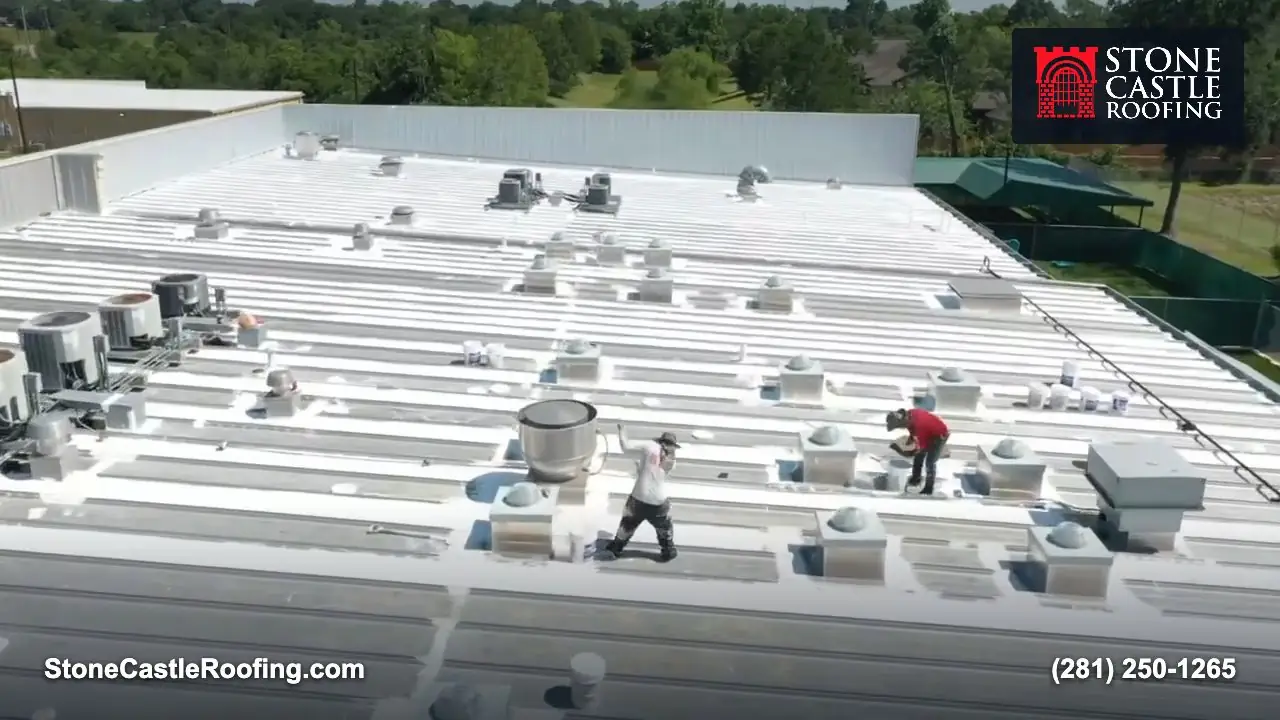
Commercial Metal Roof: Aerial Project Views
Read the transcript
[Instrumental music]
Why a Maintenance Program Pays Off
Most commercial roof problems start small: a clogged drain, a cracked sealant joint, a tech who stepped through a soft spot servicing the AC. Caught early, these are minor repairs. Missed, they become wet insulation and interior damage.
A basic commercial roof maintenance program usually includes:
- Inspections at least twice a year (spring and fall) and after major storms
- Clearing drains, gutters and scuppers
- Checking seams, flashings, penetrations and edge metal
- Photo documentation for owners, managers and insurance records
- Small repairs handled before they spread
Many manufacturer warranties also expect regular maintenance, so keeping records protects the warranty as well as the roof. Routine roof inspections are the backbone of any program.
Commercial Roofing in Houston and Pearland
Stone Castle Roofing provides commercial roofing for property owners, managers, HOAs and small businesses across Houston, Pearland, Friendswood, League City, Webster, Pasadena and the rest of our service areas. Our team brings 20+ years of combined roofing industry experience and handles residential and commercial work, which helps owners with mixed portfolios. If you are still sorting out who to hire, read about the difference between a residential and commercial roofer.
Talk to a Pearland Roofer
Repair, coating or new roof: the answer starts with a free inspection. We will check the membrane, drains, flashings and edges, then lay out your options without the jargon.
Schedule a free inspection, contact our Pearland office, or call (281) 250-1265 at any hour. We are open 24/7.
Frequently Asked Questions
TPO is one of the most common systems on newer low-slope commercial buildings in the Houston area. It is a white, heat-welded single-ply membrane that reflects sunlight and resists leaks at the seams when installed well. Modified bitumen, metal, built-up roofs and coatings are also widely used, depending on the building.
It depends on the system. TPO roofs typically last around 15 to 25 years, modified bitumen 15 to 20 years, built-up roofs 15 to 30 years, and metal roofs can last 40 years or more. Houston heat, ponding water and storm exposure can shorten those ranges, while regular maintenance helps a roof reach the long end.
A roof coating can be a good option when the existing roof is still dry, well attached and only showing surface wear. It can seal minor issues, add reflectivity and extend service life without a tear-off. Coatings are not a fix for wet insulation or a failing roof, so a moisture check should come first.
Ponding water is usually caused by clogged drains, too few drains, low spots from a settled or deflected deck, or rooftop equipment blocking water flow. Water that sits more than about 48 hours after rain is generally considered ponding. Tapered insulation, crickets and drain repairs are common fixes during a repair or replacement.
Most commercial roofs should be inspected at least twice a year, typically in spring and fall, and after any major storm. Inspections should check drains, seams, flashings, penetrations and edge metal. Regular inspections catch small problems early and help keep records many manufacturer warranties and insurance carriers expect to see.
Related articles
Residential Roofer vs Commercial Roofer: What's the Difference?
Steep-slope vs low-slope, crews, permits and insurance: how residential and commercial roofers differ, and why HOAs and landlords gain from a roofer for both.
7 min read
Roof Repair or Replacement? How to Decide on a Houston Home
Not every roof problem needs a new roof. Use this decision guide on age, damage, leaks, decking, and insurance to choose between repair and replacement.
7 min read
How Long Does a Roof Last in Houston? Lifespans by Material
Typical Houston roof lifespans by material, from 3-tab shingles to standing seam metal, plus what wears roofs out early on the Gulf Coast and how to extend it.
7 min read
About Stone Castle Roofing
Stone Castle Roofing is a locally owned roofing contractor in Pearland, TX, serving homeowners and businesses across Greater Houston. We are a GAF Certified Plus contractor and every project starts with a free roof inspection.