
Roof Leak Repair Houston
Roof Leak Repair in Houston and Pearland
We trace where the water actually gets in, show you photos of the source and give you a written repair scope before any work starts.
 5.0 stars from 100+ Google reviews
 GAF Certified Plus contractor
 Owens Corning Preferred Contractor
 BBB Accredited, A+ rating
 OSHA 30 trained
 TWIC credentialed for ports and refineries
 Locally owned in Pearland
Good roof leak repair in Houston starts with one question: where is the water really getting in? The wet spot on your ceiling tells you a leak exists. It rarely tells you where it starts. Our team traces the path from the stain back to the opening, photographs what we find and writes down exactly what needs to be repaired.
This page is about active or recurring leaks. For missing shingles, worn vents and other general fixes, see our main roof repair page.
What should I do if my roof is leaking right now?
Move people and belongings away from the wet area, catch the drip and stay out from under a sagging ceiling or any wet light fixture. Do not climb onto a wet or storm-damaged roof. If water is near wiring or the ceiling looks ready to fall, call 911 or your electric utility. Then have a qualified roofer find the source before anything is patched.
Safe First Steps While Your Roof Is Leaking
- Clear the area. Move furniture and electronics away from the drip and put down a bucket and towels.
- Watch the ceiling. Keep people and pets out from under a ceiling that is bulging or sagging.
- Stay away from wet electrical items. If water is near a light fixture, an outlet or the electrical panel, keep clear and call an electrician or your electric utility.
- Call 911 for immediate danger, such as a ceiling coming down, smoke or sparks, or a power line on or near the house.
- Stay off the roof. Wet shingles and storm debris make roofs dangerous.
- Take photos and notes from inside: the date, the time, how hard it was raining and where the water showed up.
If rain is pouring through an opening, the roof may need temporary protection such as a tarp. That is work for a trained roofer with fall protection, done once lightning and high wind have passed.
Why the Stain Is Often Not Under the Leak
Water that gets past the shingles can run along the roof deck, follow a rafter or soak across insulation before it drips. A stain in a hallway can start at a pipe boot several feet uphill, or at flashing on a wall in another room. That is why a patch placed directly above the stain sometimes misses, and why we follow the water from the attic, where it is safe to reach, and from the roof surface.
Is It the Roof, Plumbing, AC or Condensation?
Not every wet ceiling is a roof problem. When the water appears is one of the best clues.
| What you notice | What it can point to | What the inspection checks |
|---|---|---|
| Water only in heavy or wind-driven rain | Flashing at walls, chimneys or skylights, a valley, or water backing up at the roof edge | Flashing laps, valleys, gutters and the side facing the storm |
| A drip after almost every rain | A failed pipe boot, popped nails or a cracked shingle above the spot | Penetrations and fasteners uphill from the stain |
| Water on dry, sunny days | A plumbing line, the AC drain line or drain pan | Attic equipment and lines; a plumber or HVAC technician may be needed |
| Damp spots on humid mornings near vents or ducts | Condensation or poor attic ventilation | Duct insulation, attic airflow and bath fan exhausts |
Nobody can confirm the cause from a photo or a phone call. If what we find points away from the roof, we say so, so you can call the right trade. Our guide to roof leaks during heavy rain covers rain-only leaks in more detail.
Where Roof Leaks Usually Start
Pipe boots, also called pipe jacks
Houston heat and sun dry out the rubber collars that seal plumbing vents until they crack, and the nails at the base can back out. Our guide to pipe jack and flashing leaks explains how they fail and what a proper repair includes.
Flashing, valleys and roof edges
Step flashing and counterflashing protect the joints where a roof meets a wall, a chimney or a skylight, and they leak when a piece is bent, missing or held only by dried-out sealant. Valleys carry water from two roof planes, so worn shingles there show leaks first in a downpour, and clogged gutters can push water back under the roof edge.
Fasteners and decking
Popped nails leave small openings, and water that gets in slowly rots the wood underneath. The video below shows rotted decking around pipe jacks and a skylight where small openings let water seep in over time. How often a roof needs a checkup depends on its age, material and storm history, so ask us what makes sense for yours.
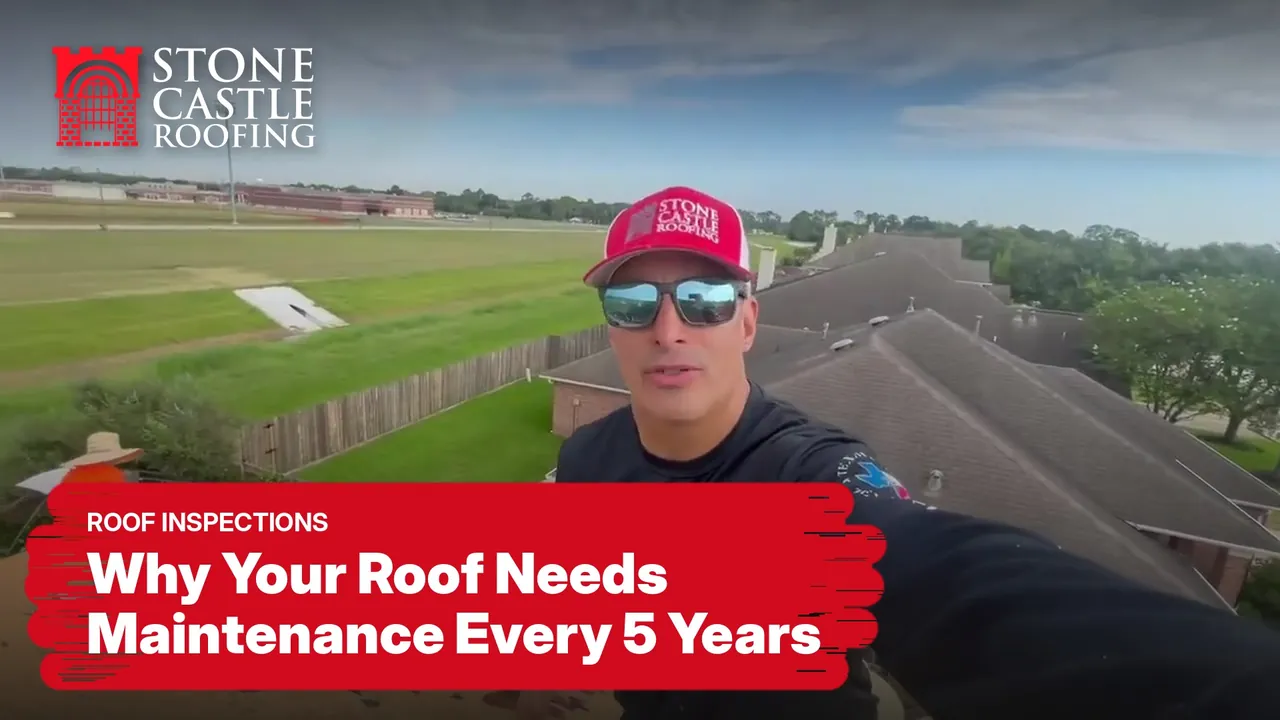
Why Your Roof Needs a Maintenance Inspection Every 5 Years
Watch on its own pageRead the transcript
Hey, guys. This is a great example of why you need roof maintenance about every five years. As you see here, all this decking has rotted out. The nails start to pop up around the pipe jacks, and water slowly seeps in. There's more over here, and at the skylight there's more rotted wood. If you need an inspection, let me know. Stone Castle Roofing, (281) 250-1265.
Wind and hail damage
Missing, torn or creased shingles, a lifted ridge cap or a damaged vent can let water in after a storm. Our storm damage restoration page covers storm inspections.
What Our Leak Inspection and Written Repair Scope Include
- The leak history: when the water shows up, where, and in what weather.
- The inside view: the stain and, where it is safe to reach, the attic above it.
- The roof surface: our inspector checks penetrations, flashing, valleys, fasteners and shingles uphill from the leak and photographs each problem.
- A written repair scope: what failed, what we would replace, whether any decking looks damaged and what else is wearing out.
- A straight recommendation: whether a targeted repair should hold, or whether the roof is near the end of its life.
A single failed pipe boot on a solid roof is usually a repair. Leaks in several places, soft decking or an aging roof can point toward a roof replacement instead. Our guide on roof repair or replacement walks through that decision, and a free roof inspection gives you the photos to decide with.
What Affects the Cost of a Roof Leak Repair
An accurate leak-repair estimate depends on inspecting the source and the surrounding roof. The price depends on:
- The source and how many there are. One pipe boot is a smaller job than flashing along a whole wall.
- The roofing material. Shingle, metal, tile and slate each take different parts and methods.
- Damaged decking, which has to be replaced before the roof is closed up.
- Pitch, height and access, since steep or tall roofs take more safety setup.
- Matching materials, when shingles or tile have been discontinued.
- Windstorm rules for your address. In the TWIA designated catastrophe area, larger repairs may need a windstorm inspection. TDI lists roof repairs of less than 100 square feet that do not involve decking among the projects that do not require one, so confirm what applies to your address.
Interior repairs such as drywall and paint are separate from the roof repair. If replacement turns out to be the better choice, our roof replacement cost page explains what drives that price.
When a Leak Follows Wind or Hail Damage
Whether a leak is part of an insurance claim depends on what caused it and on your policy. Damage from wear, age or missing maintenance is generally treated differently from sudden storm damage, and only your insurance company decides coverage. When a leak follows wind or hail, this is how we help:
We inspect the roof and photograph wind and hail damage. We prepare a written roof repair or replacement estimate for your insurance claim. We can meet your insurance adjuster on site to explain the damage we found and the roofing work in our estimate. We also complete roof repairs and replacements associated with insurance claims.
Your insurance company decides coverage and payment. You are responsible for your deductible and any costs your policy does not cover.
Learn about our storm damage roof repair and insurance claim assistance.
Water coming through the ceiling? Schedule a free inspection or call (281) 250-1265.
Serving Pearland, Houston and Nearby Communities
We repair roof leaks from our office at 7626 Longleaf Dr in Pearland for homes in Pearland, Houston, Friendswood, Manvel, Alvin, League City, Missouri City, Sugar Land, Webster, Pasadena and Clear Lake. Local details are on our Pearland, Houston and Friendswood pages, and the full list is on our service areas page.
Watch
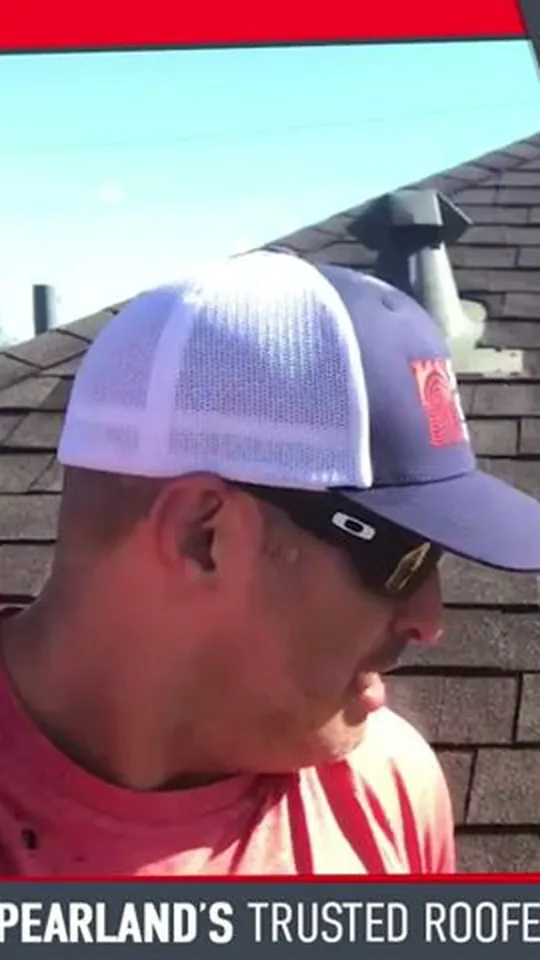
A pipe jack that lifted at the front let water reach the wood underneath. Our team shows the damage and why routine roof maintenance helps catch it early.
 Short
Pipe Jack Leak Repair in Houston
Roof Leak Repair FAQs
Heavy or wind-driven rain puts far more water on the roof and can push it sideways or uphill under laps that stay dry in a light shower. Rain-only leaks often start at flashing along walls and chimneys, in valleys, at pipe boots or where gutters back up. The exact source has to be confirmed on the roof.
A photo of the stain helps us ask better questions, but it cannot confirm the cause. Water often travels before it shows up, and some wet ceilings come from plumbing, AC drain lines or condensation instead of the roof. We confirm the source with an inspection inside and on the roof, then show you photos of what we found.
No. A stain can come from the roof, a plumbing line, an AC drain pan or condensation on ducts in the attic. Timing is a good clue: water that appears only during rain usually points to the roof, while water on dry days often points elsewhere. If what we find points away from the roof, we tell you.
We start with the leak history: when it happens, where and in what weather. Then we look at the stain and, where it is safe to reach, the attic above it. On the roof, our inspector checks the pipe boots, flashing, valleys, fasteners and shingles uphill from the leak and photographs each problem before we write the repair scope.
Sometimes sealant is part of a proper repair, but a layer of caulk over a cracked pipe boot or loose flashing is not a diagnosis. Sealant dries out in Houston heat, and it can hide the real source while water keeps reaching the wood. A lasting repair replaces or reseats the failed part.
One leak with a clear source on a roof with life left is usually a repair. Leaks in several places, a leak that returns after repairs, soft decking or a roof near the end of its typical life can make replacement the better use of money. We give you our recommendation and the reasons, with photos.
It depends on what caused the leak and on your policy. Leaks from wear or age are generally treated differently from sudden wind or hail damage. When storm damage is involved, we photograph it and provide a written estimate for your claim. Your insurance company decides coverage and payment. You are responsible for your deductible and any costs your policy does not cover.
Ready When You Are
Free roof inspections. No pressure, no surprises.