
Pipe Jack Roof Leak
Pipe Jack and Flashing Roof Leaks in Houston: Causes and Repairs
Pipe jacks can be a source of roof leaks. Learn how they fail, how they differ from other flashing leaks, what a repair covers and why caulk alone is not a fix.
What causes a pipe jack roof leak?
Most pipe jack leaks start when the rubber collar around the vent pipe cracks in heat and sun, when the nails holding the base back out, or when the shingles around it were not lapped correctly. Water then gets in at the base and can rot the decking around the pipe. A roofer confirms the source on site, because leaks near a pipe can also come from nearby flashing or from the plumbing itself.
Many homes have plumbing vent pipes that pass through the roof. A pipe boot or pipe jack seals each of these roof penetrations, and it takes years of Houston sun, heat and storms.
Here is how that seal works, how it fails, how to tell it from other flashing leaks, and what a proper repair should include. The goal is to help you understand what you are seeing, not to send anyone onto a roof.
In this article
Pipe jack, pipe boot and the pipe itself
These terms get mixed up, so it helps to separate them:
- The vent pipe is part of your plumbing. It lets drain lines breathe and usually comes through the roof as a short length of PVC or metal pipe.
- The pipe jack, also called a pipe boot, is the roofing part that seals around that pipe. It has a flat base, called a flange, that sits under the shingles above it and over the shingles below it, and a collar that hugs the pipe. Collars are commonly rubber, and some boots are all metal.
- The roof deck is the plywood or OSB under the shingles. When a pipe jack leaks, this is the wood that gets wet first.
A roofer repairs the pipe jack and the roofing around it. If the pipe itself is cracked or the leak is in the plumbing, that is work for a plumber.
How pipe jacks and their flashing fail
Common failure modes include:
- A cracked rubber collar. Sun and heat dry out rubber over time, and once it splits, water runs down the pipe into the roof.
- Fasteners backing out. Nails at the base of the flange can lift if they are not sealed or replaced with gasketed screws, leaving open holes right where water runs.
- Wrong shingle laps. If the flange sits on top of the shingles above it instead of under them, water can run under the base.
- Caulk instead of flashing. GAF notes that some installers simply cut shingles around a vent pipe and caulk the joint, which can crack and wear away with temperature changes and sun exposure.
- Storm and debris damage. Branches and wind can bend a flange or tear a collar.
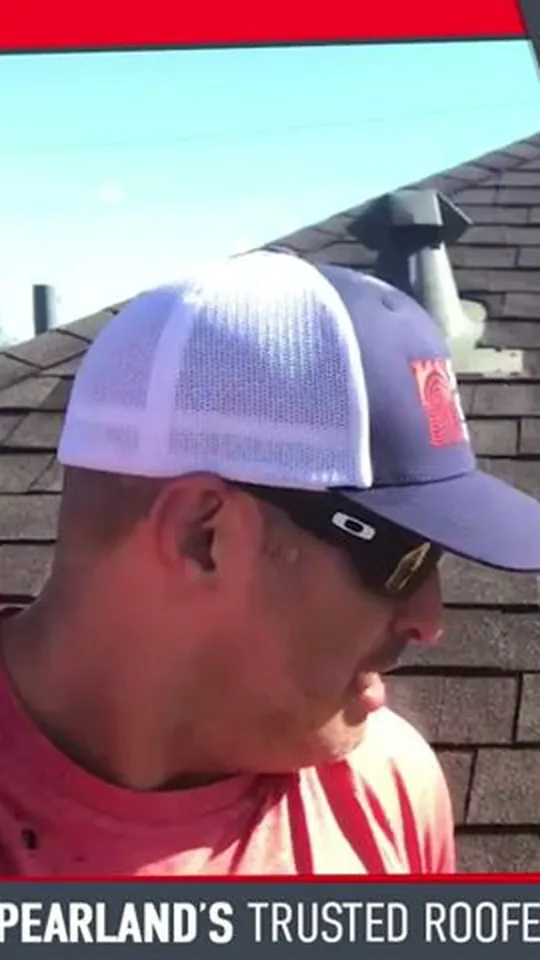
The video below shows a pipe jack that lifted at the front and let water rot the wood underneath.
Watch
Our team explains how a leaking pipe jack is found and repaired properly.
 Short
Pipe Jack Leak Repair in Houston
Pipe jack leak or a different flashing detail?
Pipe jacks are one kind of roof penetration flashing. Other flashing details can leak in similar ways:
- Step flashing runs in small pieces where a sloped roof meets a wall, such as a second story or a dormer. Leaks here often show up on an inside wall or near a window below.
- Chimney flashing and counterflashing seal the joint around a chimney. Leaks often stain the ceiling or wall beside the chimney.
- Skylight flashing seals the curb around a skylight. Stains usually appear around the skylight frame.
- Other vents, such as box vents, turbines and exhaust vents, have their own flashing and can fail the same way.
Because water travels before it drips, a stain near a bathroom does not prove the pipe jack is the source, and a stain by an outside wall does not prove it is the step flashing.
Symptoms, possible sources and what an inspection checks
Use this table to understand the possibilities. It is not a diagnosis, and none of it requires going on the roof yourself.
| Observed symptom | Possible source | What the inspection checks |
|---|---|---|
| Stain on a ceiling near a bathroom, kitchen or laundry | Pipe jack above, or plumbing below the roof | Pipe boot collar, flange, fasteners and the plumbing in the attic |
| Water running down a vent pipe in the attic | Cracked collar or open fasteners at the pipe jack | Collar condition, fastener heads and the decking around the pipe |
| Stain that grows after every rain | A penetration or fastener that is open in any rain | Every penetration and fastener uphill from the stain |
| Water only in wind-driven rain | Step flashing, counterflashing or a vent on the windward side | Flashing laps and the side of the roof facing the storm |
| Stain on an inside wall below a roof-to-wall joint | Step flashing or the wall above the roofline | Step flashing, counterflashing and siding at the joint |
| Soft or dark wood around a pipe seen from the attic | A long-running leak at the pipe jack | Decking strength around the pipe and nearby penetrations |
| Water on dry days near a pipe | Plumbing leak or condensation, not the roof | Pipe joints and insulation; a plumber may be needed |
Why caulk over everything is not a diagnosis
A tube of sealant over every pipe and seam can look like a repair, but it skips the most important step: finding out what failed. Sealant dries and cracks in Houston heat. Spread over a cracked collar or loose flashing, it can hide the real problem for a season while water keeps reaching the wood.
Sealant has a place in a proper repair, for example on fastener heads or certain flashing joints. It is not a substitute for replacing a failed pipe boot or reseating flashing so the laps shed water the way they were designed to.
What a pipe jack repair scope should include
Roof access and repairs are work for trained professionals with fall protection. When you get a written scope, look for these items:
- The part being replaced, such as a new pipe boot sized for your pipe and roof slope
- How the shingles around it will be handled, so the flange ends up under the shingles above and over the shingles below
- Fasteners, such as gasketed roofing screws or sealed fasteners suited to the roofing material
- The decking around the pipe, and whether any soft or rotted wood will be replaced
- Other penetrations, since boots on the same roof often age at the same rate
- Before and after photos, so you can see what was done
If several pipe boots and flashing details are failing on an older roof, the scope should say so, and it may be time to weigh replacement. Our guide on roof repair or replacement helps with that decision, and our post on how long a roof lasts in Houston covers typical lifespans.
Have the leak traced and repaired
Stone Castle Roofing is locally owned in Pearland and serves Houston and nearby communities. Our roof leak repair service traces the source, photographs it and gives you a written repair scope before any work starts. For other repairs, see our main roof repair page, or call (281) 250-1265.
Sources
Frequently Asked Questions
They are two names for the same roofing part: the flashing that seals around a plumbing vent pipe where it comes through the roof. It has a flat flange that sits under and over the surrounding shingles and a collar that fits around the pipe. The vent pipe itself is part of the plumbing.
It depends on the material, the installation and how much sun the roof gets. Rubber collars dry out and crack sooner in strong heat and UV than the shingles around them, so they often need attention before the rest of the roof. Checking them during a roof inspection is the simplest way to catch a crack early.
When the collar is cracked or the flange is damaged, replacing the pipe boot is usually the lasting fix, along with any rotted decking around it. Adding sealant over a cracked boot may slow a leak for a while but does not fix the failed part. The repair scope should say which approach is planned and why.
No. Water near a vent pipe can come from the pipe jack, from nearby flashing, or from the plumbing itself, and condensation can also form on pipes and ducts. Water on dry days often points to plumbing. A roofer can check the roofing side and tell you when the evidence points to a plumber instead.
We recommend against going on the roof yourself. Roofs are dangerous, and caulk over a cracked boot can hide the real problem while water keeps reaching the wood. A trained roofer with fall protection can find what failed, replace the part and check the decking around the pipe.
Related articles
Roof Leaks During Heavy Rain in Houston: Why It Happens and What to Do
A roof that stays dry in light rain and drips in a downpour is giving you clues. Here is how to read the pattern safely and what a roofer should check next.
7 min read
Roof Repair or Replacement? How to Decide on a Houston Home
Not every roof problem needs a new roof. Use this decision guide on age, damage, leaks, decking, and insurance to choose between repair and replacement.
7 min read
How Long Does a Roof Last in Houston? Lifespans by Material
Typical Houston roof lifespans by material, from 3-tab shingles to standing seam metal, plus what wears roofs out early on the Gulf Coast and how to extend it.
7 min read
About Stone Castle Roofing
Stone Castle Roofing is a locally owned roofing contractor in Pearland, TX, serving homeowners and businesses across Greater Houston. We are a GAF Certified Plus contractor and every project starts with a free roof inspection.